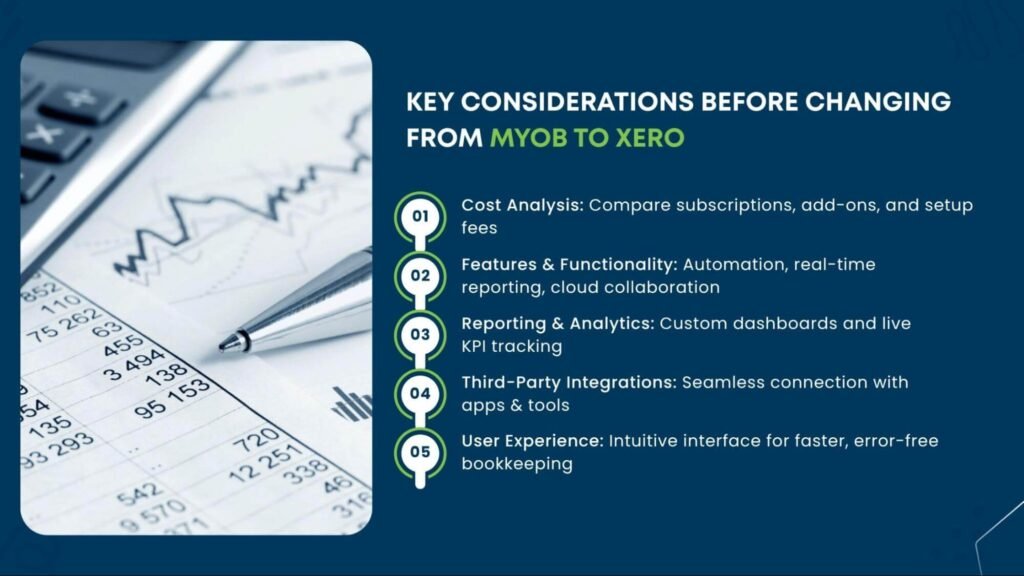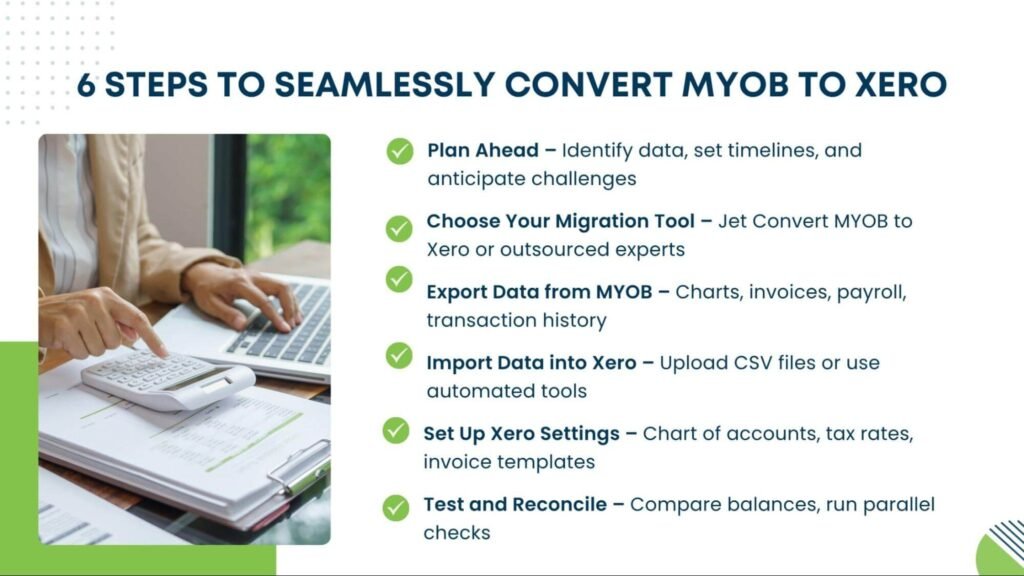











Guide: How to Find a Reliable Outsourcing Company in Australia

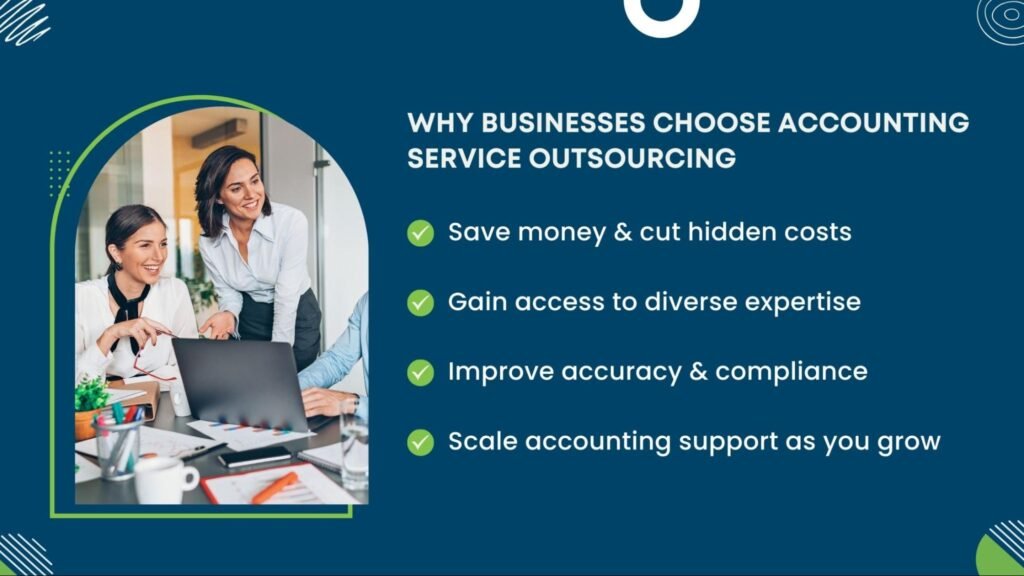
Guide on how to find a reliable outsourcing company in Australia, featuring two professionals reviewing documents together.

The persistent talent and skills shortage in Australia continues to pose a significant challenge for organisations across multiple industries. A recent Robert Half study revealed that 89% of Australian employers are concerned about securing top-tier talent to drive their businesses forward. 

This growing concern has made business processing and outsourcing an increasingly strategic choice for companies seeking reliable access to high-quality professionals. 

In fact, IBISWorld reports that Australia hosts 36,428 business process outsourcing (BPO) businesses in 2024, reflecting a 3.2% growth rate between 2019 and 2024.

With many options available, selecting the right partner is crucial for your outsourcing business. A reliable outsourcing company ensures your goals are met efficiently, while the wrong choice can cause costly setbacks. 

Providers must deliver dependable outsourcing services aligned with long-term objectives.

Key Points

  • Australia faces a severe talent and skills shortage, driving demand for outsourcing solutions.
  • Business processing and outsourcing are a strategic way to access skilled global professionals cost-effectively.
  • India stands out as a hub, with over 4 million professionals powering the global BPO industry.
  • Choosing the right outsourcing partner is crucial to ensure efficiency, security, and long-term business growth.
  • A reliable outsourcing company provides not just cost savings but also expertise, scalability, and compliance support.

Why Offshore Staffing Matters for Australian Businesses

Offshore staffing, a form of outsourcing, is no longer just a trend, it’s a smart strategy to overcome Australia’s talent shortage. Here’s why:

  1. Cost Efficiency – Significant savings compared to local hiring, allowing businesses to reinvest in growth.
  2. Access to Global Talent – Wider pool of qualified professionals to meet skills in demand.
  3. Competitive Advantage – Staying agile and efficient in the global business landscape.
  4. Proven Strategy – 86% of Australian business leaders hire overseas staff to address the skills gap, as per Globalisation Partners.
  5. India as a Hub – Over 4 million professionals work across thousands of BPOs, making India a top destination for offshore staffing. Around 300+ Australian companies currently engage skilled Indian talent for their operations.

Selecting the right partner is critical, choosing a reliable outsourcing company ensures your outsourcing strategy aligns with long-term business goals.

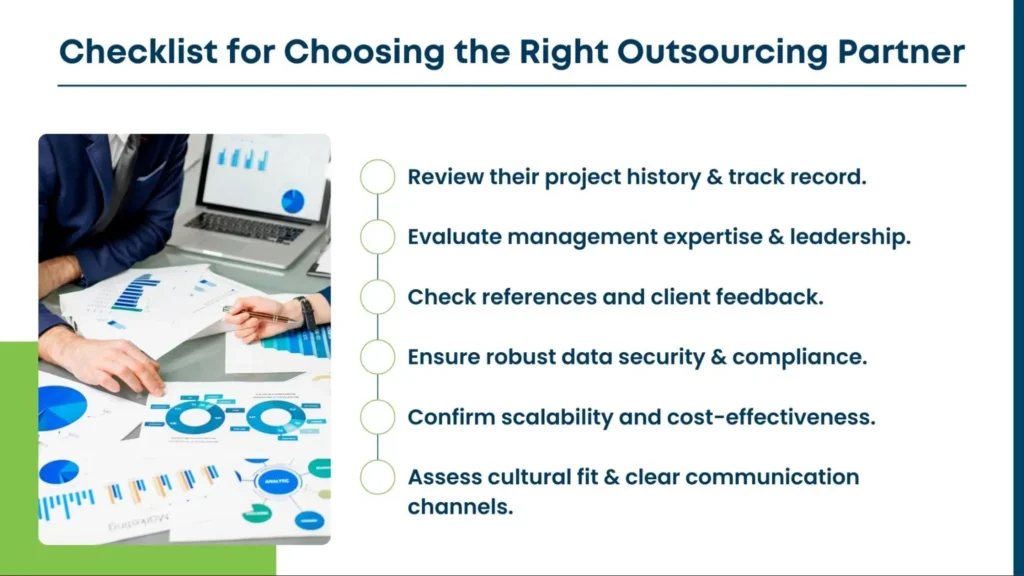
Checklist for choosing the right outsourcing partner with points on project history, management expertise, client feedback, data security, scalability, and cultural fit.

Experience and Expertise: Choosing the Right Outsourcing Partner

Selecting a reliable outsourcing company in Australia requires careful evaluation of their experience and expertise. A partner with a proven track record in your industry can ensure that your offshore team contributes to growth, efficiency, and seamless operations.

When assessing a provider, consider the following in detail:

  1. Review Their Projects – Investigate the outsourcing company’s previous projects, especially those similar to what you plan to execute. Examine the scope, complexity, and outcomes of these projects to determine whether they have successfully handled challenges comparable to yours.

    Understanding their project history provides insights into their operational capabilities and problem-solving skills.


  2. Evaluate the Management Team – The leadership team is a strong indicator of the company’s professionalism and expertise. Explore the About Us page on their website and review LinkedIn profiles of key managers.

    Look for experience in managing projects within your industry, the qualifications of team leaders, and evidence of a proven track record in scaling remote teams effectively.


  3. Check References – Speaking directly with current and former clients can offer an honest assessment of the outsourcing company’s performance. Ask about service quality, responsiveness, and how challenges were addressed.

    Additionally, request referrals to gain a broader perspective on their reliability and effectiveness in delivering business process outsourcing services.

A thorough evaluation of experience and expertise ensures that your outsourcing partner not only meets your immediate project needs but also contributes to long-term strategic success.

Importance of Specialised Expertise in Outsourcing

Partnering with a reliable outsourcing company in India can help Australian businesses overcome talent shortages while gaining specialised expertise. Key advantages include:

  1. Access to Global Talent – With 97% of Australian business leaders highlighting global expansion for competitive advantage, Indian outsourcing companies provide access to highly skilled professionals who can fill critical roles efficiently.
  2. Cost-Effective Solutions – Engaging offshore teams in India allows Australian companies to leverage expert talent without the high costs of full-time, onshore employees, reducing overall operational expenses.
  3. Accelerated Business Initiatives – Skilled Indian professionals can handle complex business functions, enabling faster execution of speed-to-market strategies and other critical initiatives.
  4. Enhanced Focus for Internal Teams – By delegating specialised tasks to Indian offshore teams, local employees can concentrate on core responsibilities, driving growth and efficiency.
  5. Flexible and Scalable Workforce – Indian outsourcing teams provide the flexibility to scale resources based on business needs while maintaining consistent quality and reliability.
  6. Proven Expertise – India’s robust BPO and outsourcing industry is renowned for delivering high-quality services across multiple sectors, helping Australian companies innovate and stay competitive without straining budgets.

Choosing a reliable outsourcing company in India with specialised expertise allows Australian businesses to optimise operations, foster innovation, and scale effectively in a competitive market.

Reputation and Reviews: Ensuring a Trustworthy Outsourcing Partner

Selecting a reliable outsourcing company in India is critical for Australian businesses seeking high-quality offshore support. Evaluating the company’s reputation ensures a successful partnership and reduces operational risks. Consider the following best practices:

  1. Conduct a Thorough Background Check – Research the company online and gather information from trusted sources. Consult your business network for recommendations and verify licences, certifications, accreditations, and industry awards to confirm legitimacy.
  2. Explore Their Website and Social Media – A credible outsourcing company shares details on services, processes, clients, and team size. Case studies, testimonials, and active social media engagement indicate professionalism and transparency.
  3. Assess Data Security Measures – Offshore teams often handle sensitive business data. Ensure the provider follows robust data security and privacy protocols to safeguard against cyber threats and maintain compliance with international standards.
  4. Understand Recruitment Policies and Employee Management – Evaluate the company’s hiring process, including candidate screening, ethical standards, and ongoing performance evaluations. This ensures the offshore team maintains professionalism and accountability.
  5. Check Reviews and Client Feedback – Online platforms like Glassdoor, Google Business Profile, Google Reviews, and Facebook can provide additional insights into the provider’s reliability, work culture, and service quality. Positive feedback from both clients and employees signals a trustworthy partner.

By thoroughly assessing reputation and reviews, Australian businesses can confidently select a reliable outsourcing company in India that delivers consistent, high-quality business process outsourcing services while protecting operational and data integrity.
This same due diligence applies when engaging payroll outsourcing companies to handle payroll operations securely and accurately.

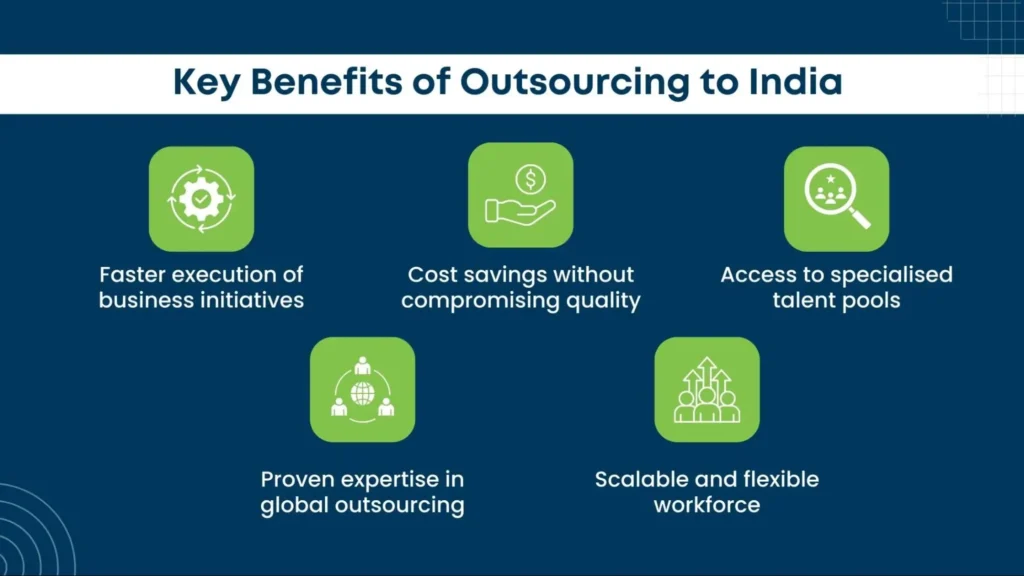
Key benefits of outsourcing to India including faster execution, cost savings, access to talent pools, proven expertise, and a scalable workforce.

Importance of Client Testimonials and Case Studies

  • Showcase Reputation and Expertise – Testimonials highlight real client experiences and satisfaction.
  • Gauge Trustworthiness – Potential clients rely on feedback to assess reliability and capability.
  • Demonstrate Proven Performance – Case studies provide detailed reports on strategies, challenges, and outcomes.
  • Highlight Problem-Solving Skills – Real client pain points make the testimonials and case studies relatable and compelling.
  • Support Decision-Making – Helps Australian businesses evaluate whether the offshore provider can meet their outsourcing needs.

Service Offerings

  • Assess Alignment with Business Goals – Ensure the offshore provider supports your growth and strategic objectives.
  • Evaluate Service Capabilities – Check the range and quality of outsourcing services offered.
    Review Past Successes – Consider case studies and testimonials to verify results for similar projects.
  • Consider Scalability – Partner should provide flexibility to scale offshore teams as business demands grow.
  • Ensure Cost-Effectiveness – Evaluate pricing models to balance quality with budget efficiency.

Communication and Support

  • Clear Communication Channels Are Crucial – Poor communication is a leading reason outsourcing partnerships fail.
  • Set Expectations Early – Clearly define project requirements and goals from the start to avoid misinterpretation.
  • Overcome Language and Cultural Barriers – Address potential misunderstandings between Australian clients and Indian offshore teams to maintain smooth collaboration.
  • Provide Regular Updates – Frequent reporting ensures timely decision-making, builds trust, and reduces delays.

Cultural Fit

  • Address Cultural Differences Early – Misaligned cultural expectations can derail offshore operations.
  • Foster Intercultural Communication – Proactive discussions help Australian clients and Indian offshore teams find common ground.
  • Promote Collaboration – Shared understanding improves teamwork, efficiency, and trust.

Technology and Security

  • Evaluate Hardware and Software – Ensure systems are updated and compatible with your business tools.
  • Check for Scalability – Tech infrastructure should support growth without compromising performance.
  • Assess Data Security Measures – Review cybersecurity protocols, encryption, firewall protection, and regulatory compliance.
  • Verify Backup and Disaster Recovery Plans – Confirm data restoration and business continuity in case of outages or cyberattacks.
  • Review Network Connectivity – Stable, high-speed internet is essential for seamless collaboration.
  • Inspect IT Support – Confirm 24/7 IT support, regular maintenance, and quick issue resolution.
  • Evaluate Cloud Platforms – Ensure cloud infrastructure is secure, reliable, and suitable for your business needs.

Conclusion

Choosing the right outsourcing partner for your Australian business may feel overwhelming, but with a reliable outsourcing company from India, the process can be streamlined. The right provider ensures your offshoring strategy aligns with business goals, maintains quality standards, and delivers cost-effective solutions without straining operational expenses.

At NCS Australia, we connect businesses with highly skilled Indian professionals through end-to-end managed services. With a proven approach, robust IT infrastructure, and strict data security protocols, your offshore team can operate efficiently while supporting your growth and compliance needs.

A Beginner’s Guide: Multi-State Payroll Compliance Legislation

Beginner's guide to multi-state payroll compliance legislation with payroll calculator

Managing payroll across multiple states requires more than just cutting paychecks. It means accurately calculating salaries, withholding the correct taxes, and ensuring timely payments for employees working in different jurisdictions. 

The complexity arises because each state enforces its own regulations, tax laws, and reporting obligations, making compliance a demanding task for businesses.

Even a small error, such as miscalculating tax withholdings or overlooking a reporting deadline, can place your business at risk of audits, penalties, and reputational damage. That’s why understanding multi-state payroll compliance legislation is not just a legal necessity but a strategic safeguard. 

For businesses also navigating global operations, leveraging accounting outsourcing and other offshore outsourcing services can provide scalable back-office efficiency and compliance support.

This guide serves as a practical starting point to help employers remain compliant, streamline processes, and protect their organization from costly pitfalls.

Key Takeaway

  • Multi-state payroll involves complex salary calculations, tax withholdings, and timely payments, with mistakes risking audits, penalties, and reputational damage.
  • Key elements include state and local tax withholding, unemployment insurance, labor law compliance, and accurate reporting, often supported by a payroll compliance practitioner online or outsourced bookkeeping services.
  • Best practices include using an advanced payroll management system, partnering with payroll experts, maintaining clear internal processes, and staying updated on state-specific requirements.
  • Strategic compliance reduces risks, enhances operational efficiency, and supports growth through solutions like outsourced SMSF compliance and outsourced payables.

What is Multi-State Payroll?

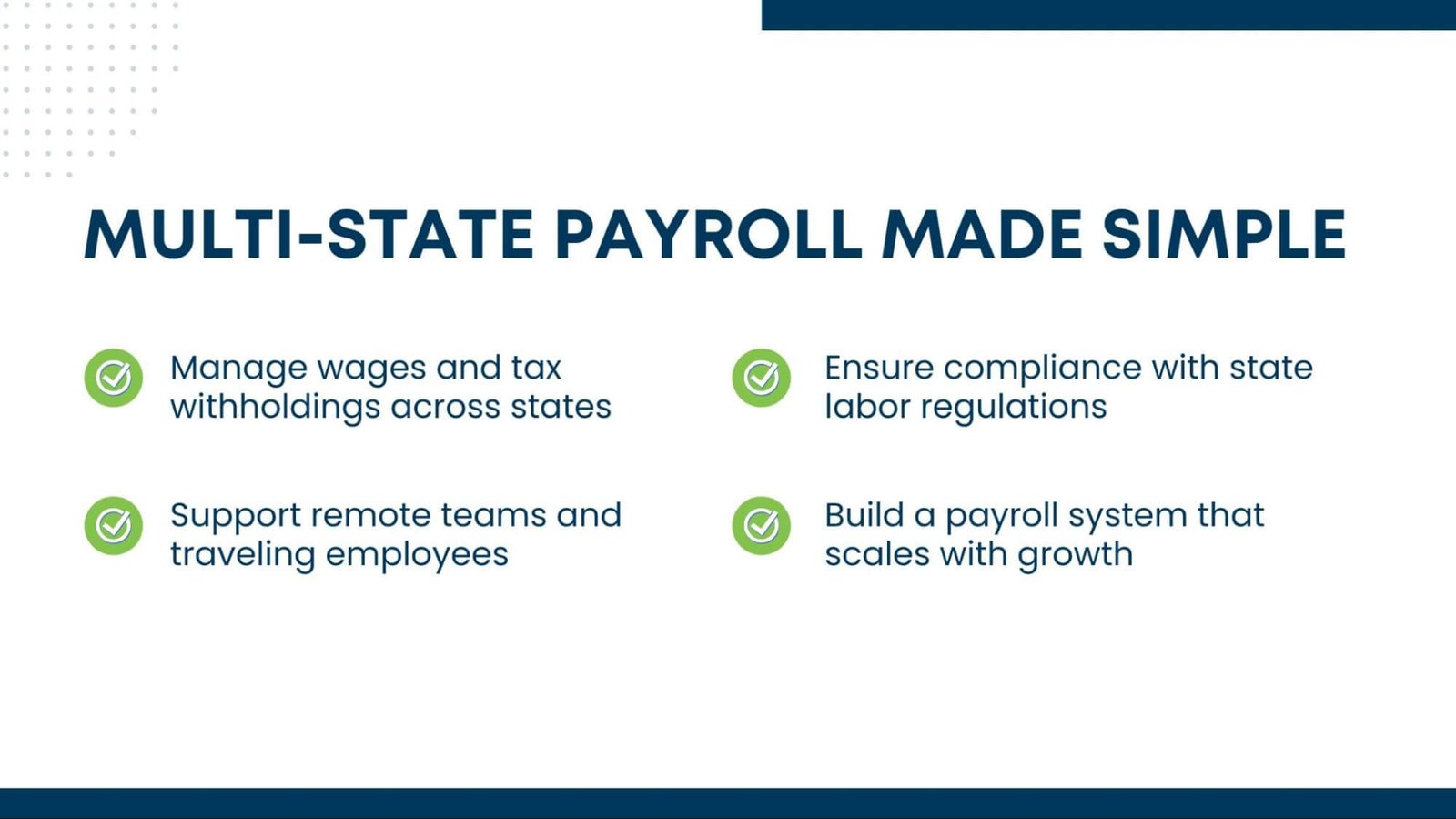
Multi-state payroll refers to the process of managing wages, tax withholdings, and compliance requirements for employees who work across different state jurisdictions. 

For businesses with remote teams, traveling staff, or operations spread across multiple states, this becomes a critical responsibility.

At its core, multi-state payroll compliance legislation ensures that employers meet the unique tax laws, labor regulations, and reporting obligations of each state where their employees are active. 

Understanding these requirements is essential not only for avoiding penalties but also for building a payroll system that supports growth and flexibility. 

Key elements involved in multi-state payroll include payroll outsourcing and implementing robust outsourced payroll services to maintain compliance while reducing manual errors.

Key points of multi-state payroll made simple checklist

Key elements involved in multi-state payroll include:

State and Local Income Tax Withholding

For multi-state employers, calculating the correct income tax for each employee involves navigating a complex mix of state and local regulations. Here are the key considerations under multi-state payroll compliance legislation:

  • Work Location vs. Residency: Generally, income tax should be withheld based on the state where the employee performs their job duties. Residency rules may also apply, particularly if employees live in one state and work in another.
  • Remote and Traveling Employees: For employees who work remotely or travel frequently, employers must determine if they have created a taxable “nexus” with the state. A nexus establishes whether the business is required to withhold state income taxes.
  • De Minimis Rules: Some states allow limited work within their borders before triggering tax withholding obligations, while others require withholding for any work performed, regardless of duration.
  • Reciprocal Agreements: Certain states have reciprocal tax agreements, meaning employees are taxed only in their state of residence, even if they work elsewhere.
  • Local Taxes: In addition to state income tax, employers may also need to account for city, county, or other local tax requirements, which can add another layer of complexity.

Unemployment Insurance Taxes

Under multi-state payroll compliance legislation, employers must carefully manage unemployment insurance (UI) taxes, which are determined by the state where employees perform their work duties, not where they reside. 

For fully remote teams, the state in which the employer’s headquarters is located generally governs unemployment insurance obligations.

Key points to understand include:

  • Federal-State Program: Unemployment insurance is a joint initiative designed to provide temporary financial support to workers who lose their jobs through no fault of their own.
  • SUTA (State Unemployment Tax Act): This program is partially funded by the federal government but administered at the state level. Each state sets its own unemployment tax requirements.
  • Variable Tax Rates: States determine their unique unemployment insurance tax rate, wage base limits, and compliance guidelines, which can change over time.
  • Employer Responsibility: Businesses must register with the appropriate state agency and remit unemployment insurance contributions accurately to avoid penalties and remain compliant.

Outsourcing elements of compliance, such as financial compliance or regulatory compliance, can further ease this burden.

Compliance with State Labor Laws

Managing multi-state payroll also requires adherence to each state’s unique labor regulations. Employers must consider:

  • Minimum Wage Requirements: Ensuring employee pay meets or exceeds state-specific minimum wage laws.
  • Overtime Rules: Calculating and compensating overtime in compliance with the regulations of each state.
  • Leave Policies: Observing state-mandated paid leave, sick leave, and family leave provisions.
  • Workers’ Compensation Insurance: Maintaining coverage that meets state-specific requirements.
  • Other Employment Regulations: Staying compliant with additional state labor laws, such as employee classification and workplace safety standards.

Reporting and Filing

Accurate and timely reporting is essential under multi-state payroll compliance legislation. Many businesses now rely on a payroll compliance practitioner online to stay updated with changing tax laws, file returns correctly, and ensure documentation is submitted on time to the appropriate state agencies. 

This online support can be especially valuable for companies managing employees across multiple jurisdictions.

Key responsibilities include:

  • Payroll Tax Filings: Submitting state and local tax returns, wage reports, and other required documentation.
  • Staying Informed: Monitoring changes in state labor and tax laws to ensure ongoing compliance.
  • Deadlines and Accuracy: Meeting all reporting deadlines and maintaining accurate records to avoid penalties and legal issues.

Organizations that already work with outsourced bookkeeping services or professional bookkeeping services often integrate reporting into their broader compliance systems.

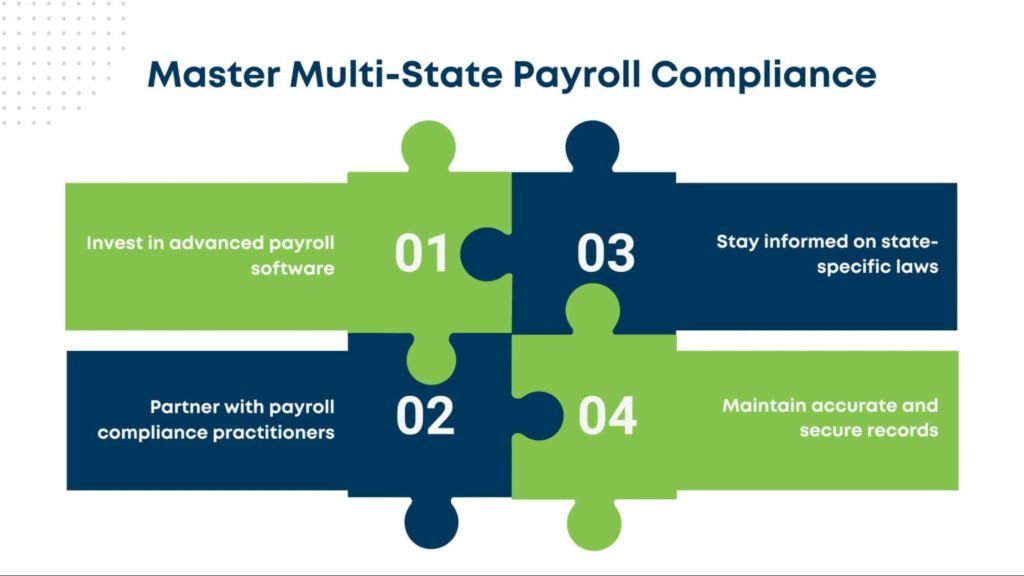
Steps to master multi-state payroll compliance puzzle graphic

Best Practices to Navigate Multi-State Payroll

Managing payroll across multiple states introduces significant complexity for HR and accounting teams. Differing state regulations, tax rates, and wage-and-hour laws demand meticulous planning and execution to ensure compliance.

With the right processes and tools, businesses can reduce risks while maintaining accurate, timely employee compensation. Here are some best practices for efficient multi-state payroll compliance legislation:

  • Invest in an Advanced Payroll Management System: Automating federal, state, and local tax requirements reduces manual errors and ensures accurate tax calculations and timely filings. Consider integrating with virtual CFO services for deeper insights.

  • Partner with Payroll Processing Services or Tax Experts: Engaging a professional payroll compliance practitioner or tax advisor can help your business stay updated on evolving regulations across jurisdictions. Expert guidance supports accurate compliance, minimizes penalties, and simplifies complex scenarios.

  • Establish Clear Internal Processes: Implement robust procedures to collect, validate, and maintain employee data, including work locations, states of residence, and pay rates. Conduct regular internal audits to identify and correct discrepancies in payroll processing and tax filings.

  • Stay Informed About State-Specific Requirements: Monitor updates to tax rates, wage base limits, and reporting deadlines for every state where your employees operate. Awareness of changes ensures timely compliance.

  • Maintain Accurate and Secure Records: Keep detailed payroll records, including pay stubs, tax filings, and supporting documentation. Implement strong security measures to safeguard sensitive employee data from unauthorized access.

Conclusion

Navigating multi-state payroll compliance legislation may seem complex, but with a structured approach, the right tools, and expert guidance, businesses can effectively manage payroll across multiple jurisdictions. 

Investing in an advanced employee payroll management system or human resource payroll system, partnering with experienced practitioners, and leveraging solutions like outsourced SMSF compliance or outsourced payables creates stronger compliance frameworks.

By staying informed, implementing robust processes, and leveraging technology, employers can minimize risks, avoid penalties, and focus on what matters most: supporting their workforce and driving business growth. 

Compliance is not just a legal obligation; it’s a strategic advantage that strengthens your credibility, supports your workforce, and drives operational efficiency. To learn more about optimizing payroll and compliance, contact our team today.

Finance & Accounting Outsourcing Guide for Startups in Australia

Finance & Accounting Outsourcing Guide for Startups in Australia.

For Australian founders, time often carries the same weight as capital. Every hour spent balancing books, reconciling accounts, or chasing overdue invoices is an hour not invested in building innovative products, strengthening customer relationships, or attracting investors. 

With more than 98,000 startups, Australia has emerged as the seventh-largest startup hub globally as per StartupBlink, and in such a fast-paced ecosystem, founders simply cannot afford to lose focus on their core mission.

Outsourcing finance and accounting services offers a strategic advantage. By entrusting bookkeeping, compliance, and financial management tasks to specialised professionals, entrepreneurs can redirect their energy toward growth and innovation. 

Outsourcing not only ensures accuracy and compliance but also delivers cost efficiency, helping startups remain agile and competitive in a market that demands both speed and precision.

How Finance and Accounting Outsourcing Saves Australian Startups Time and Money

For Australian startups, managing finances in-house can be both time-consuming and costly. By leveraging finance and accounting outsourcing for startups, founders gain access to specialised expertise, streamline compliance, improve cash flow management, and utilise advanced financial tools, all without the overhead of a full internal team. 

Whether through local providers or trusted offshore partners, accounting outsourcing turns finance from a back-office task into a strategic growth advantage, allowing startups to focus on innovation, scale efficiently, and make smarter business decisions.

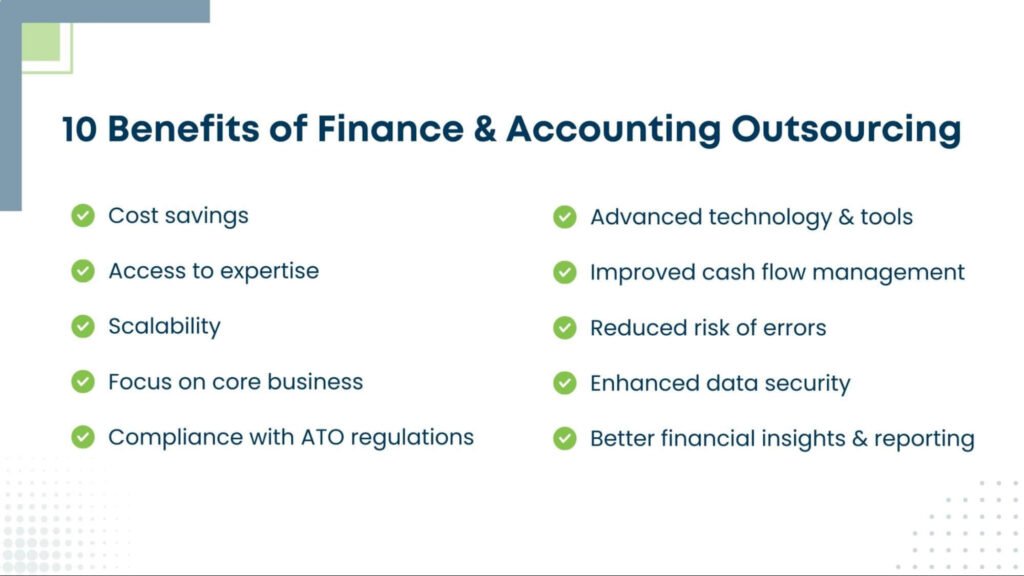
10 Benefits of Finance & Accounting Outsourcing. List of benefits such as cost savings, access to expertise, improved cash flow management, etc.

Cost Savings

Outsourcing finance and accounting can help startups manage costs efficiently:

  • Lower overheads: No need to hire a full-time accountant, pay salaries, superannuation, or provide office space.
  • Flexible service levels: Pay only for what you need, monthly bookkeeping, payroll processing, or quarterly reporting.
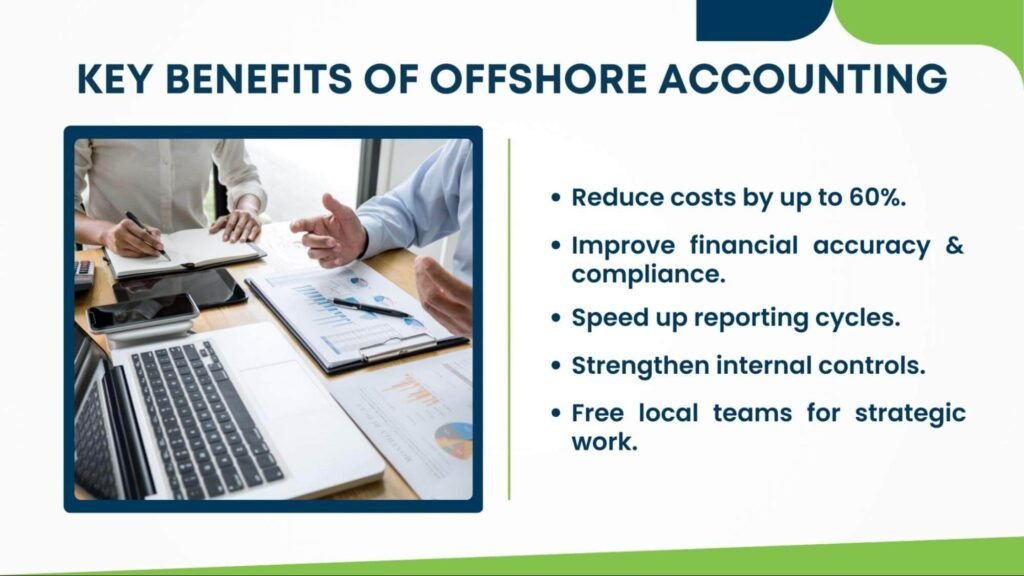
  • Local or offshore options: Engage Australian firms or offshore providers of offshore outsourcing services in India, Vietnam, or the Philippines to access quality support at competitive rates.
  • Scalable as you grow: Services can expand as the startup grows, making outsourced bookkeeping services a cost-effective long-term solution.

Access to Expertise

  • Specialised knowledge: Startups gain access to qualified professionals who understand Australia’s tax and regulatory requirements, including GST and payroll obligations.
  • Accurate compliance: Outsourced services ensure timely BAS lodgements, tax returns, and structured financial advice.
  • Support for growth: Founders can focus on scaling their business with confidence, knowing their finances are managed by experts. Many outsourced bookkeeping companies in Australia now offer tailored solutions for startups, ensuring accuracy, scalability, and complete financial visibility from day one.

Scalability

  • Flexible service levels: Accounting services can expand or contract based on the startup’s workload, from a few invoices to hundreds.
  • No recruitment burden: Startups avoid hiring and training additional finance staff as their operations grow.
  • Adaptable tools and processes: Cloud-based accounting and reporting systems adjust seamlessly to evolving business needs.

Market growth insight: The Australian bookkeeping and accounting outsourcing sector is projected to grow at an 8.8% CAGR from 2025 to 2030, reaching US$1,318.3 million according to ResearchAndMarkets, 2024, highlighting increasing adoption among startups.

Focus on Core Business

  • Maximise productive time: Outsourcing finance and accounting allows founders to spend less time on chasing invoices or fixing spreadsheets.
  • Strategic focus: Entrepreneurs can dedicate more energy to building products, engaging customers, and pitching investors.
  • Reliable support: Startups receive consistent financial management from online specialists without losing focus on core business activities.
  • Flexible collaboration: Services can be provided by local accounting teams or remote business outsourcing solutions, ensuring seamless integration with the startup’s operations.

Compliance with ATO Regulations

  • Avoid costly penalties: Late BAS lodgements, GST reporting errors, or PAYG withholding mistakes can negatively impact a startup’s finances.
  • Manage regulatory obligations: Outsourced services handle Single Touch Payroll (STP) reporting, superannuation guarantee contributions, and other ATO requirements.
  • Expert oversight: Professional financial compliance services ensure accuracy and compliance across all reporting areas.
  • Peace of mind for founders: Startups can focus on growth while trusting that financial regulations are met without errors or delays.

Advanced Technology & Tools

  • Access to premium software: Partnering with the right outsourcing firms provides startups with best-in-class accounting technology without the high implementation costs.
  • Automation & efficiency: Tools like Xero, QuickBooks, Zoho Books, Wiise, and NetSuite automate reconciliation, integrate bank feeds, and offer cloud-based dashboards to reduce manual work and improve accuracy.
  • Real-time visibility: Founders gain instant insights into invoicing, payroll, and reporting, enabling faster and more informed decision-making.
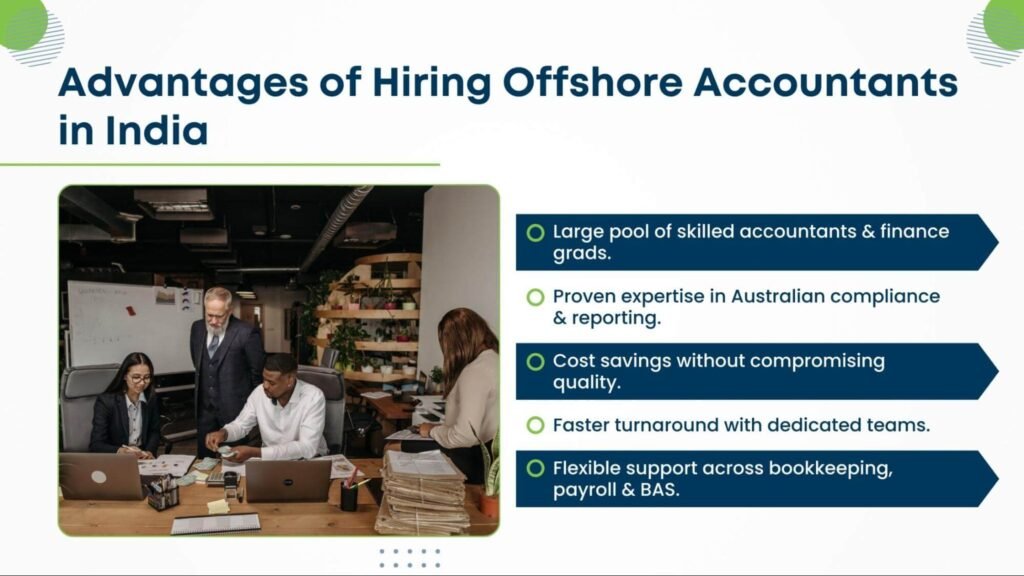
Improved Cash Flow Management

  • Monitor working capital: Outsourced accountants track payables and receivables to identify potential cash shortfalls early.
  • Maintain liquidity: Regular monitoring helps startups manage late payments, operating costs, and tax obligations efficiently.
  • Financial stability: Enables founders to make timely decisions and maintain steady cash flow.

Reduced Risk of Errors

  • Qualified oversight: Professionals handle payroll, GST, and expense coding to minimize mistakes.
  • Accurate records: Reduce audit issues and ensure reliable financial statements.
  • Less founder burden: Founders can focus on growth instead of correcting bookkeeping errors.

Enhanced Data Security

  • Robust systems: Outsourcing firms use multi-factor authentication, encrypted storage, and secure cloud access.
  • Protect sensitive data: Startups benefit from enterprise-level security measures that are often too costly to implement in-house.
  • Reduced risk: Mitigates the chance of costly data breaches.

Better Financial Insights & Reporting

  • Actionable analysis: Outsourced teams provide monthly or quarterly reports that go beyond filing, helping founders understand burn rates, margins, and profitability.
  • Strategic decisions: Financial insights are translated into actionable strategies for growth.
  • Informed planning: Founders can make smarter, data-driven business decisions with clarity and confidence.

What Services Startups Are Outsourcing

Startups can leverage finance and accounting outsourcing services and outsourced CFO services for a range of critical tasks, including:

  • Bookkeeping: Maintaining accurate and up-to-date financial records.
  • Tax Filing and Compliance: Ensuring timely and precise tax returns while meeting regulatory requirements.
  • Financial Reporting and Forecasting: Delivering actionable insights into financial health and future projections.
  • Payroll Management: Managing payroll processing, including tax deductions and outsourced payroll services.
  • Audit Support and Risk Management: Assisting with audits and identifying potential financial risks.
  • Strategic Finance Leadership: Through outsourced CFO services, startups gain access to high-level financial planning, fundraising support, and investor-ready reporting without hiring a full-time CFO.

By outsourcing these essential functions, startups can ensure their finances are expertly managed while focusing on growth, innovation, and core business objectives.

Choosing the Right Provider

  • Experience and expertise: Select finance outsourcing companies with proven knowledge in startups and compliance.

  • Service offerings: Ensure they provide comprehensive support, from bookkeeping to outsourced CFO services and strategic forecasting.

  • Technology integration: Use firms that leverage cloud-based tools and automation.

  • Scalability and flexibility: The provider should adapt services as the startup grows.

  • Reputation and support: Check client reviews and responsiveness to ensure reliable collaboration.

Conclusion

For Australian startups, managing finances in-house can be time-consuming, costly, and prone to errors. Finance and accounting outsourcing for startups offers a strategic solution, providing access to expert knowledge, advanced tools, and scalable services that allow founders to focus on growth and innovation. 

From bookkeeping and payroll to tax compliance and financial reporting, outsourcing transforms accounting into a growth enabler rather than a burden.

By partnering with trusted providers like NCS Australia, startups can ensure their financial operations are accurate, compliant, and efficient. 

With the right outsourced support, businesses can streamline processes, improve cash flow, reduce risks, and gain insights that drive smarter, data-backed decisions, empowering founders to concentrate on building their vision and scaling their startup successfully.

A Complete Guide to SMSF Administration and Compliance in Australia 2025

Guide to SMSF administration and compliance in Australia

Managing a self-managed super fund (SMSF) is both empowering and demanding. Trustees gain greater control over retirement strategies, but they also carry the burden of meeting strict regulatory expectations. 

With the Australian Taxation Office (ATO) intensifying its focus on compliance, robust SMSF administration and compliance processes are now essential to safeguard members’ wealth and avoid costly penalties.

The sector continues to grow, with more than 653,000 SMSFs and over $1 trillion in assets under management as of June 2025, highlighting the importance of accurate record-keeping, reporting, and audits. 

For trustees and self-managed super fund administrators, this means ensuring every detail, from contributions to investment reporting, aligns with regulatory standards. 

NCS Australia’s guide explores administration best practices, compliance obligations, and how outsourcing solutions can help trustees and firms stay efficient, scalable, and fully audit-ready in 2025.

Why Compliance Has Become Non-Negotiable for SMSFs in 2025

  • Tighter ATO scrutiny: The ATO has intensified its oversight of SMSFs, with a greater focus on trustee behaviour, timely lodgments, and investment compliance.
  • Penalties for non-compliance: Administrative penalties for breaches such as late reporting, loans to members, or record-keeping failures can be significant. In severe cases, trustees risk having their funds disqualified.
  • Growing regulatory pressure: Accurate SMSF administration and compliance are essential not only for meeting deadlines but also for safeguarding trustee reputations and member retirement savings.
  • Sector scale: As of June 2025, there are 653,062 SMSFs with over $1.05 trillion in assets, representing around 28% of total superannuation assets in Australia.
  • Industry-wide responsibility: With SMSFs holding such a large share of retirement wealth, even small compliance failures can have wider implications for confidence in the system.
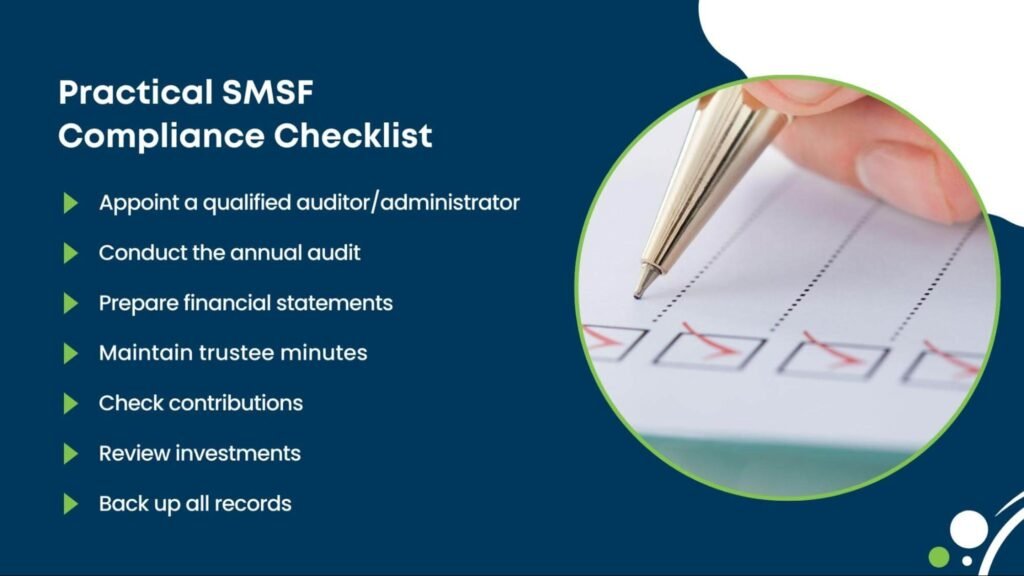
Practical SMSF compliance checklist with key tasks

Core SMSF Administration Tasks Every Fund Must Manage

Effective administration is the foundation of a compliant SMSF. Trustees and advisers rely on accurate processes to ensure that every transaction and obligation is accounted for throughout the financial year. High-quality SMSF administration services typically cover:

  • Record-keeping: Maintaining accurate documentation of all trustee decisions, member contributions, investment purchases, and fund expenses.
  • Contributions and rollovers: Tracking contributions against annual caps, managing rollovers between funds, and ensuring compliance with contribution rules.
  • Pension calculations: Accurately calculating pension payments and minimum drawdowns to meet both member needs and ATO requirements.
  • Tax compliance: Preparing and lodging the SMSF annual return, including income tax, CGT, and regulatory information.
  • TBAR and SuperStream reporting: Meeting real-time reporting requirements for transfer balance caps and complying with the electronic data standards for contributions and rollovers.
  • Investment reconciliation: Matching investment records against bank statements to ensure valuations and reporting are accurate.
  • Financial statements and lodgement: Preparing financial accounts and coordinating timely lodgement with the ATO to avoid penalties.

By managing these tasks consistently and correctly, trustees can ensure their SMSFs remain compliant while also creating a clear foundation for audits and long-term investment strategies.

For trustees and self-managed super fund administrators, following these core tasks ensures the SMSF remains compliant and audit-ready throughout the year.

Key SMSF Compliance Requirements & Reporting (what trustees must do)

  1. Auditor appointment & annual audit: Trustees must appoint an approved SMSF auditor at least 45 days before the annual return is due. The audit must be completed each year, and any contraventions must be reported to the ATO.
  2. SMSF Annual Return (SAR): The annual return must be lodged on time (e.g., 31 October for many funds, with extensions via tax agents). Late lodgement affects fund status and rollovers.
  3. Trustee responsibilities: Trustees must act in members’ best interests, keep assets separate, and comply with SIS rules. Breaches can lead to penalties or disqualification.
  4. Documentation & evidence: Strong records, minutes, valuations, and transaction evidence are vital to meet audit and SMSF reporting requirements.
  5. Additional reporting (TBAR & SuperStream): Trustees must meet TBAR and SuperStream deadlines for contributions and rollovers or risk penalties.
  6. ATO & ASIC penalties: Non-compliance can result in administrative fines, loss of tax concessions, or trustee disqualification.

The Benefits and Risks of SMSF Outsourcing

Many trustees and firms rely on SMSF outsourcing services to handle the increasing complexity of administration and compliance. Outsourcing offers access to specialised expertise, improved efficiency, and audit readiness. 

It also allows firms to scale resources during peak lodgement periods, helping trustees stay on top of reporting deadlines while focusing on investment decisions.

That said, choosing to outsource SMSF administration comes with risks. Sensitive financial data must be safeguarded, and poor vendor selection can lead to errors or compliance breaches. 

Partnering with experienced self-managed super fund administrators or choosing to outsource SMSF administration can provide trustees with both expertise and peace of mind.

SMSF compliance audits and what auditors check

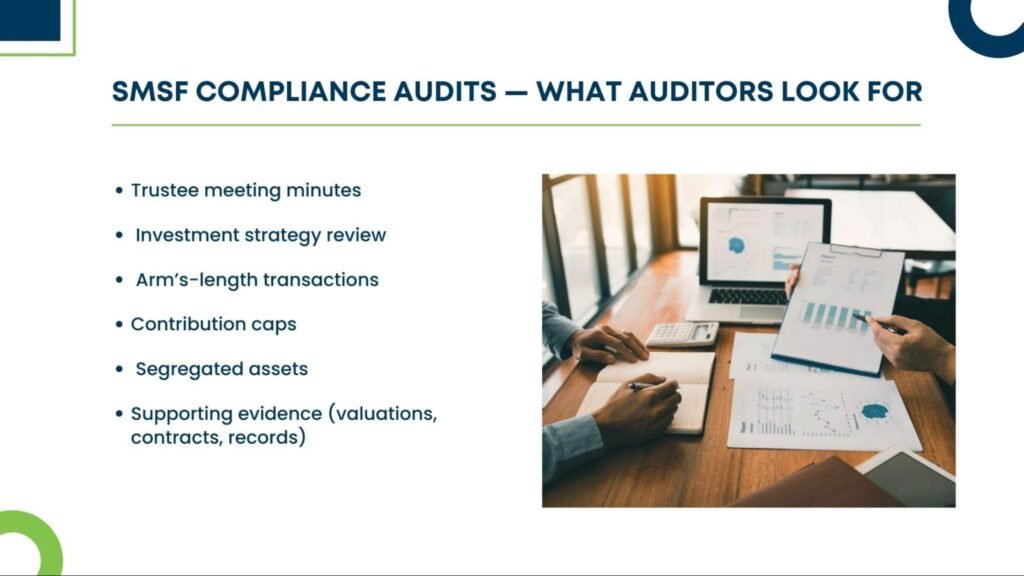
SMSF Compliance Audits — What Auditors Look For

During SMSF compliance audits, approved auditors typically examine:

  • Trustee meeting minutes – to confirm decisions are properly documented.
  • Investment strategy – ensuring it is in place, reviewed regularly, and aligned with members’ retirement goals.
  • Arm’s-length transactions – checking that all dealings are conducted on commercial terms.
  • Contribution caps – verifying contributions comply with ATO limits.
  • Segregated assets – ensuring fund assets are kept separate from trustees’ personal or business assets.
  • Supporting evidence – Such as valuations, contracts, and transaction records, to validate compliance.

Auditors are required under ATO and ASIC guidance to report any contraventions, which can lead to penalties or regulatory enforcement if not rectified.

Practical Checklist for Trustees & Administrators

  • Appoint a qualified auditor/administrator – ensure they are approved and experienced in SMSF compliance.
  • Conduct the annual audit – schedule early to allow sufficient time before lodgement.
  • Prepare financial statements – accurate, complete, and ready for audit review.
  • Maintain trustee minutes – document all key decisions and meetings.
  • Check contributions – ensure caps and limits are not exceeded.
  • Review investments – verify strategy compliance and arm’s-length dealings.
  • Back up all records – secure storage of digital and physical documentation using professional document digitization services.

This checklist helps trustees and administrators stay compliant, reduces audit risks, and supports efficient SMSF administration and compliance.

Conclusion

Effective SMSF administration and compliance is no longer optional; it is a critical responsibility for trustees and advisers to protect member assets and meet regulatory standards. Consistent record-keeping, timely lodgements, and adherence to reporting requirements form the foundation of a compliant and well-managed SMSF.

Trustees can also benefit from leveraging professional expertise through self-managed super fund administrators or by choosing to outsource SMSF administration. 

Doing so ensures accuracy, enhances audit readiness, and allows trustees to focus on strategic investment decisions. Get in touch with our team to explore how expert SMSF administration services can help your fund remain compliant and efficient in 2025.

A Complete Guide to Hiring a Remote Bookkeeper in 2025

Guide to hiring a remote bookkeeper in 2025.

The trend of hiring a remote bookkeeper is accelerating in 2025, as more businesses recognise the value it brings to financial management. Leveraging outsourcing for accounting firms enables companies to streamline operations, improve accuracy, and reduce the overhead costs associated with maintaining an in-house finance team. 

For many, this approach offers the ideal balance between efficiency and affordability. In this guide, we explore why businesses of all sizes, particularly those seeking professional bookkeeping services, are increasingly embracing this model and how it can transform the way you manage your finances.

Key Takeaways

  • Strategic Advantage: Hiring a remote or offshore bookkeeper improves efficiency, accuracy, and cost savings.


  • Expert Support: Virtual bookkeepers manage payroll, reporting, and compliance with professional precision.


  • Scalable & Flexible: Services can be adjusted to match business growth, seasonal demands, or shifting needs.


  • Cost & Productivity Gains: Businesses cut overheads while freeing leadership to focus on growth and strategy.

What is Remote Bookkeeping?

Remote bookkeeping is the practice of managing a business’s financial data and transactions from outside the office. A virtual bookkeeper leverages cloud-based software to perform essential tasks such as data entry, invoice processing, payroll, and financial reporting. This gives businesses access to accurate financial insights without needing a full-time, in-house team.

Here’s why many companies are turning to online bookkeeping services in 2025:

  • Cost Efficiency – Businesses save on rent, utilities, recruitment, and training costs by avoiding the need for an in-house setup.


  • Expert Financial Management – With outsourced bookkeeping services, companies can rely on specialists to handle transactions and reporting with accuracy.


  • Focus on Growth – When financial administration is managed externally, leaders can dedicate more time to core operations and strategy.


  • Scalability for Small Businesses – Bookkeeping services for small businesses are especially valuable, as they provide flexibility and professional support without long-term overhead.
  • Access to Advanced Tools – A virtual bookkeeper uses secure, cloud-based software that allows for real-time updates and streamlined collaboration.
Woman doing bookkeeping with receipts and a laptop.

Remote Bookkeeping: The Process

Once you have completed the process of hiring a remote bookkeeper, the workflow typically follows three structured stages designed to ensure accuracy, transparency, and efficiency.

1. Data Collection

The first step is to collect all essential financial information. To establish a smooth start, businesses should provide their virtual bookkeeper with clear expectations, defined objectives, and access to essential financial records. 

Collaboration between the internal team and the remote professional is crucial at this stage, as it sets the foundation for accurate bookkeeping.

2. Data Processing

After collecting the required information, the offshore bookkeeper reviews and organises the data to understand the company’s financial health. 

This step allows the professional to track cash flow, categorise transactions, and prepare a framework for further analysis. Effective data processing ensures compliance while enabling proactive decision-making.

3. Report Delivery

In the final stage, the bookkeeper compiles detailed financial reports tailored to the client’s needs. These reports highlight key insights, ensure all transactions are recorded correctly, and often include recommendations to strengthen the business’s financial position. 

With outsourced bookkeeping services, companies gain timely and actionable insights that support long-term growth.

Tasks Handled by a Remote Bookkeeper

A skilled remote bookkeeper is entrusted with a wide range of responsibilities that ensure accurate financial management and support business growth. These tasks often include:

1. Maintaining Financial Records

The most fundamental duty of a remote bookkeeper is to maintain accurate and up-to-date financial records. This includes:

  • Recording daily financial transactions in secure accounting software
  • Ensuring compliance with accounting standards and regulations
  • Creating and organising financial entries for transparency
  • Sharing timely reports with business owners to reflect the true financial health of the company

2. Budgeting and Forecasting

Through careful budgeting and forecasting, a virtual bookkeeper provides valuable insights that guide decision-making. For businesses seeking advanced support like virtual CFO, outsourced CFO services, or strategic financial planning, professional guidance can ensure smarter long-term financial decisions.

3. Accounts Payable

Managing accounts payable is another critical responsibility. Businesses often turn to accounts payable outsourcing for streamlined invoice processing, supplier payment management, and overall cash flow improvement.

This not only strengthens supplier relationships but also supports healthier cash flow management.

4. Accounts Receivable

A remote bookkeeper also oversees accounts receivable, ensuring payments from clients are tracked and managed promptly. Many companies also rely on accounts receivable outsourcing and AR support to improve collections, optimise cash flow, and strengthen financial stability.

5. General Ledger Management

The general ledger forms the backbone of any accounting system. An online bookkeeper ensures accuracy by:

  • Recording and reconciling transactions
  • Categorising expenses appropriately
  • Managing credit card receipts and entries
  • Providing a clear financial trail for audits and decision-making

By handling these essential tasks, outsourced bookkeeping services free up business owners to focus on growth while ensuring that every financial detail is managed with precision.

Software Used by Remote Bookkeepers

When hiring a remote bookkeeper, the right technology is essential. Modern software ensures accuracy, efficiency, and compliance, providing businesses with real-time financial insights. Here are five of the most widely used tools for online bookkeeping services in 2025:

1. QuickBooks

A leading cloud-based solution that automates payroll, invoicing, expense tracking, and tax management, making bookkeeping simpler and more accurate.

2. Sage Accounting Software

A versatile platform offering payroll, inventory, and financial reporting, designed for small to medium-sized businesses seeking flexible solutions.

3. Zoho Books

An affordable, user-friendly option ideal for bookkeeping services for small businesses, with features like billing, tax compliance, and workflow automation.

4. Xero

Known for its intuitive interface, Xero manages invoicing, bank reconciliations, and cash flow reporting, while delivering real-time insights.

5. Oracle NetSuite

An enterprise-grade platform for advanced outsourced bookkeeping services, offering automation in payables, receivables, compliance, and financial reporting. These localised solutions ensure compliance with Australian standards while maintaining the flexibility of global software tools.

Business professionals discussing work at a laptop.

How to Set Up Remote Bookkeeping for Your Business

If you are looking to start virtual bookkeeping services, following a structured setup process ensures efficiency, professionalism, and scalability. Here are the essential steps:

Step 1: Start with a Strong Business Plan

A clear business plan lays the foundation for success. Your plan should include:

  • Business name, structure, and legal setup
  • Target clients, competitors, and industry analysis
  • SWOT analysis: strengths, weaknesses, opportunities, and threats
  • Key problems your services aim to solve
  • Cost-effectiveness of your offerings
  • Available capital, projected cash flow, estimated expenses, and expected revenue
  • Growth strategy and long-term vision
  • Marketing strategy to attract and retain clients

Step 2: Obtain Required Licenses and Permits

  • Register your business with the relevant authorities to secure legal identification.
  • Acquire necessary permits and licenses specific to bookkeeping or accounting services.
  • Pay applicable registration and licensing fees, which vary by location.

Step 3: Acquire the Right Resources

  • Essential hardware includes laptops, monitors, webcams, and headsets.
  • Reliable broadband is essential for seamless remote bookkeeping operations.
  • Powerful accounting software to manage financial records efficiently.
  • Minimal overhead makes remote bookkeeping in Australia an attractive and cost-efficient option.

Step 4: Set Competitive Pricing

  • Conduct thorough market research to understand competitor pricing.
  • Define service packages that cater to businesses of different sizes.
  • Offer scalable pricing options to attract startups, SMEs, and larger enterprises.

Step 5: Implement Data Security Measures

  • Data protection is critical due to the growing number of cyber threats.
  • Implement robust security protocols, including encryption, secure access, and regular monitoring.
  • Ensure compliance with industry regulations and client confidentiality standards.

Step 6: Develop a Creative Marketing Strategy

  • Analyse your target audience, their challenges, and how your services provide solutions.
  • Optimize your online presence to make it easy for clients to reach you.
  • Use innovative marketing approaches to attract, engage, and retain clients.

Benefits of Hiring a Remote Bookkeeper

The advantages of hiring a remote bookkeeper are numerous, offering both operational efficiency and strategic value. Key benefits include:

1. Easy Access to Experts

  • Gain immediate access to seasoned professionals with extensive experience in bookkeeping.
  • Stay updated with the latest accounting standards, software, and industry practices.
  • Outsourcing allows you to leverage expertise without investing heavily in training or development.

2. Cost Savings

  • Save on infrastructure, salaries, benefits, and other in-house staffing costs.
  • Free up time to focus on core business operations while experts manage financial tasks.
  • According to PwC, online bookkeeping services in Australia can reduce overheads by up to 40% compared to traditional in-house setups.

3. Boost in Productivity

  • Accurate and efficient bookkeeping enhances overall operational efficiency.
  • Business leaders can focus on growth strategies while financial tasks are handled by experts.
  • Clear separation of responsibilities streamlines workflows and improves decision-making.

4. Flexibility and Scalability

  • Services can be adjusted to match the evolving needs of your business.
  • Work seamlessly with clients and teams across different locations and time zones.
  • Outsourced bookkeeping services provide the flexibility to adapt to changing business demands without disruption.

Conclusion

In 2025, hiring a remote bookkeeper is a smart way for businesses to gain efficiency, accuracy, and cost savings. Online bookkeeping services provide expert financial management without the expense of an in-house team, while offering flexibility to scale as needed.

Whether you are a small business exploring outsourced bookkeeping services for a small business or an enterprise seeking outsourced bookkeeping services, a skilled virtual bookkeeper can streamline operations, improve productivity, and ensure compliance. 

By choosing the right tools, addressing challenges proactively, and following best practices, businesses can unlock the full potential of remote bookkeeping and drive sustainable growth. To get started, contact our team for guidance.

The Complete Guide to Payroll Processing in Australia

Australian Payroll Processing Guide 2025 cover

No matter whether your organisation employs five people or fifty, the rules of payroll in Australia remain the same: compliance is non-negotiable, and failing to meet obligations can lead to costly penalties.

That’s why understanding the fundamentals of payroll is essential, particularly for small and medium-sized businesses that may not have the advantage of an in-house payroll team. Without proper systems, managing wages, taxes, and entitlements can quickly become overwhelming. Many businesses now rely on payroll outsourcing and related solutions to ease this burden.

This Australian payroll processing guide will help you navigate the essentials with confidence, whether you handle payroll in-house or rely on professionals in payroll and accounting services in Australia, ensuring your business meets every requirement for payroll compliance in Australia.

Key Takeaways

  • Payroll in Australia is complex, and compliance with ATO and Fair Work requirements is non-negotiable.
  • Following 9 clear steps helps businesses process payroll accurately, on time, and in line with legislation.
  • Payroll processing time depends on factors like workforce size, pay frequency, and the use of technology.
  • Manual payroll is error-prone and resource-heavy, while automation and STP-enabled systems drive efficiency.
  • Outsourcing payroll services offers time savings, expert compliance management, and scalable solutions.

What is Payroll Processing?

Payroll processing is the systematic handling of employee compensation covering wage calculations, deductions, and the timely distribution of payments, all while staying fully compliant with Australian taxation and employment laws.

The process requires businesses to accurately capture and maintain records of employee work hours, salary structures, and entitlements, ensuring that every payslip issued reflects precise and transparent information.

Australia is often regarded as having one of the world’s most complex payroll frameworks, and mistakes in this area can lead not only to dissatisfied employees but also to severe financial penalties and legal consequences under payroll compliance in Australia.

When managed effectively, payroll reduces admin burdens, ensures compliance, and builds employee trust. Accurate payroll boosts satisfaction, engagement, and a stronger workplace culture.

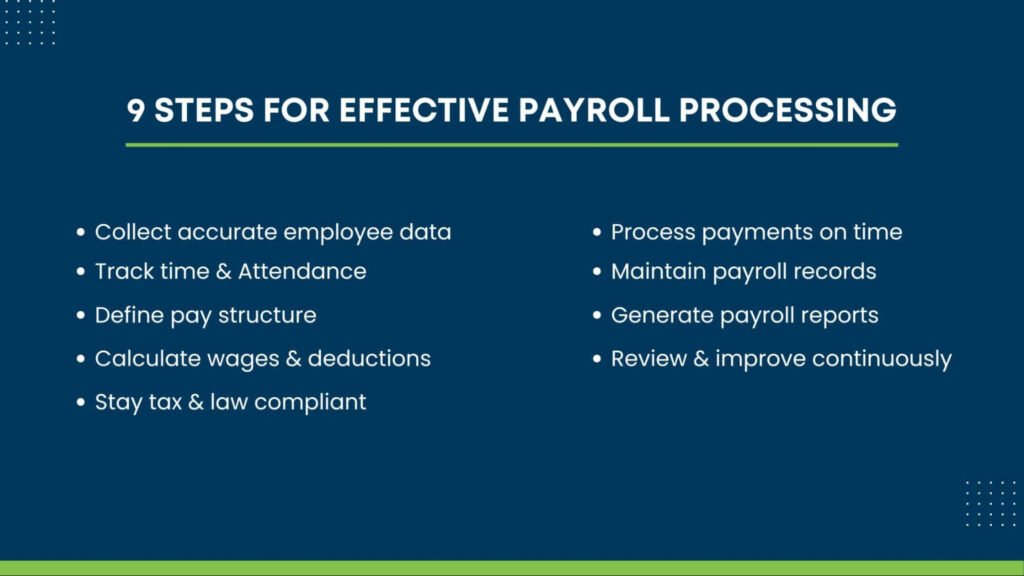
9 Steps for Effective Australian Payroll Processing

In this Australian payroll processing guide, we outline nine essential steps every business should follow to manage payroll accurately and efficiently. 

These steps are designed to help organisations maintain compliance, minimise errors, and ensure employees are paid correctly and on time, foundations that are critical for both regulatory obligations and employee satisfaction. 

9 steps for effective payroll processing

1. Complete Payroll Registration and Setup

Before you can begin the end to end payroll process, it’s essential to finalise all registration and setup requirements. This includes:

  • Obtaining an Australian Business Number (ABN): An ABN is an 11-digit number that uniquely identifies your business for taxation and ATO reporting purposes.
  • Registering for Pay As You Go (PAYG) Withholding: Employers must withhold income tax from employee wages and remit it to the ATO on their behalf.
  • Managing Tax File Numbers (TFN): Ensure both your business and employees have TFNs, and that each employee completes a TFN Declaration form to enable accurate tax deductions.
  • Opening a Business Bank Account: A dedicated account helps streamline payroll and accounting functions.

Additionally, businesses can leverage professional payroll management services in Australia to implement a robust end to end payroll process with tips, compliant with Single Touch Payroll (STP) Phase 2, which is now mandatory for reporting payroll data to the ATO. This is a critical step for achieving seamless payroll compliance in Australia.

2. Calculate Total Gross Pay

Once your setup is complete and your STP-compliant payroll system is in place, the next step is calculating employee gross pay. This involves multiplying the employee’s hourly rate by the total hours worked in the pay period.

Beyond base wages, you must also factor in overtime, annual leave, allowances, commissions, and bonuses. Neglecting to include these additional earnings can result in inaccurate tax calculations and incorrect deductions, creating compliance risks and employee dissatisfaction.

3. Calculate Payroll Taxes

Tax compliance is central to every payroll function. At this stage, you must ensure that the correct payroll taxes are withheld and remitted in accordance with ATO guidelines.

Accurate tax calculation not only protects your business from legal penalties but also ensures that employees receive the right net pay. Errors in this step can harm employee trust, strain relationships, and, in worst cases, result in financial or legal consequences for your organisation.

4. Identify and Apply Employee Deductions

In addition to taxes, employers must account for other deductions such as superannuation contributions, health insurance premiums, union fees, or salary sacrifice arrangements.

It’s important to distinguish between pre-tax and post-tax deductions and apply them at the correct stage of the end to end payroll process. Doing so ensures accuracy in payments and compliance with both employee agreements and legislative requirements.

5. Calculate Employee Net Pay

After applying taxes and deductions, the remaining amount is the employee’s net pay, commonly known as take-home pay.

This figure represents the final amount transferred to the employee for the pay period. Accuracy at this step is critical, as even minor errors can damage employee trust and create unnecessary administrative burdens.

6. Review and Approve Payroll

Before finalising payroll, a comprehensive review should be conducted to confirm accuracy and compliance. This review typically falls under the responsibility of the payroll manager, HR head, or business owner.

While it may be tempting to fast-track this step during busy times, approval acts as a safeguard against errors, discrepancies, or non-compliance. 

A proper review not only protects the business but also ensures employees are paid correctly and on time, strengthening confidence in your payroll system.

7. Distribute Employee Payments and Payslips

Regardless of whether employees are paid weekly, fortnightly, or monthly, payroll must be processed on time. Timely payments build trust, enhance financial visibility, and demonstrate reliability within the organisation.

In addition to transferring wages, employers must provide each employee with a printed or electronic payslip for the pay period. Payslips are a legal requirement in Australia and must include gross earnings, deductions, net pay, and the number of hours worked. 

Clear and transparent payslips not only meet compliance standards but also help employees understand their entitlements.

8. File Tax Reports Promptly

Once employees have been paid, the next step is to file all payroll tax reports and remit deductions to the Australian Taxation Office (ATO). Each payday, employers are required to submit payroll data via STP-enabled software.

Staying up to date with changes in payroll legislation, tax rates, and superannuation requirements is vital to avoid penalties. Trusted resources such as the Australian Taxation Office (ATO) and the Fair Work Ombudsman provide current guidance for businesses.

9. Maintain Accurate Payroll Records

The final step in the end to end payroll process is maintaining complete and accurate records. Businesses are legally required to keep payroll records for at least seven years, making it essential to store them securely and accessibly.

Many organisations now opt for cloud-based systems or partner with providers offering document digitization services, helping them maintain payroll compliance, improve data and protect sensitive employee information. 

Maintaining detailed records of payroll transactions not only meets compliance standards but also supports smoother audits and informed business decision-making.

What Factors Affect Payroll Processing Time?

Payroll efficiency is not determined by a single step but by a combination of factors that influence how long it takes to complete the end to end payroll process. Understanding these variables can help businesses plan better, reduce delays, and ensure accuracy.

1. Accuracy of Employee Data

Accurate data entry is essential for seamless payroll operations. Details such as working hours, pay rates, deductions, and benefits must be recorded correctly. Any errors or discrepancies require time-consuming corrections, which can slow down payroll processing and delay payments.

2. Number of Employees

The size of your workforce has a direct impact on processing time. Larger organisations have more employee data to collect, verify, and reconcile, and calculating wages, deductions, and taxes is more complex and time-intensive.

3. Complexity of Payroll Structure

Not all payrolls are straightforward. Multiple pay rates, varying pay periods, overtime, commissions, superannuation, and student loan deductions all add complexity. The more intricate the structure, the greater the time required to ensure compliance and accuracy.

4. Payroll Frequency

How often employees are paid also impacts payroll processing time. Weekly or fortnightly runs, common in industries like retail and hospitality, require more resources, as data must be processed and verified more often. Monthly payments reduce the number of runs, making the process less time-consuming.

5. Internal Approval Processes

Approvals for timesheets, leave requests, or payroll changes are essential checkpoints that maintain compliance. However, delays in managerial approvals can create bottlenecks, slowing down payroll and potentially delaying payments to staff.

6. Payroll Processing Methods

The method used, manual or automated, plays a significant role. Manual payroll is slow, error-prone, and resource-intensive. 

Automated solutions, by contrast, streamline calculations, reduce errors, and significantly improve efficiency.

7. Use of STP-Enabled Software

In Australia, payroll compliance requires Single Touch Payroll (STP) reporting. Employers must use STP-enabled payroll software to electronically report wages, PAYG withholding, and superannuation to the ATO at each pay cycle. 

Manual reporting is not permitted, making technology an essential driver of payroll efficiency.

8. Outsourcing Payroll Services

Engaging professional payroll processing providers can significantly reduce delays and ensure accuracy, especially for businesses with larger or more complex payroll structures.

Outsourcing allows businesses to leverage specialist expertise, minimise errors, and free up internal resources for other priorities. 

While it may come with additional costs, outsourcing often delivers long-term efficiency and compliance benefits.

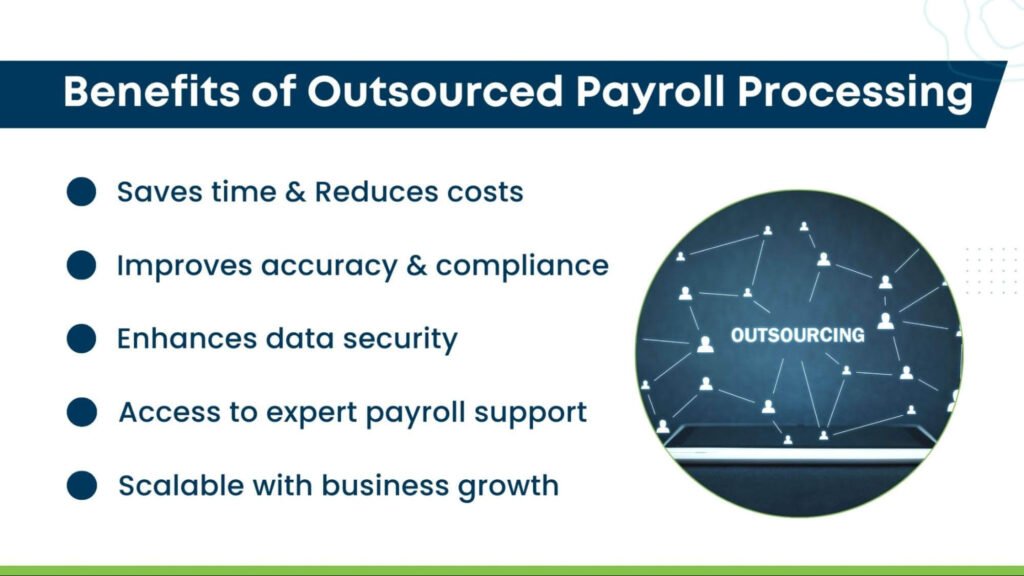
Benefits of outsourced payroll processing

Benefits of Outsourced Payroll Processing

Managing payroll in-house can be complex and time-consuming. Partnering with payroll processing companies in Australia offers key advantages that extend beyond compliance:

  • Time and Cost Savings: Outsourcing reduces the administrative burden on internal teams, freeing up resources for core business activities.


  • Expert Compliance Management: Professional providers stay updated with ATO regulations, superannuation changes, and Fair Work requirements, minimising the risk of penalties.


  • Accuracy and Reduced Errors: With advanced payroll management services in Australia, errors in wage calculations, deductions, and reporting are significantly reduced.


  • Access to Technology: Outsourced providers often use sophisticated payroll software, ensuring streamlined processes and STP compliance.


  • Scalability and Flexibility: Whether your workforce grows or contracts, payroll processing providers can adapt services to meet changing business needs.

For businesses looking to streamline payroll further, partnering with experts not only supports compliance but also complements other back-office solutions like outsourced bookkeeping services, SMSF outsourcing services, and financial compliance services.

Conclusion

Payroll is not just an administrative task; it’s a critical function affecting compliance, employee trust, and overall business efficiency. This Australian payroll processing guide has walked through the fundamentals, from registrations and tax calculations to reporting and record-keeping, while also exploring the factors that influence processing time.

For small and medium-sized businesses, partnering with payroll processing companies in Australia or connecting with payroll and accounting services in Australia ensures compliance and allows leaders to focus on strategic growth. 

If you’re ready to streamline payroll and strengthen compliance, don’t wait; get in touch with NCS Australia today.

10 Best CRM Software for Accounting Firms in 2025: A Comprehensive Review

A promotional graphic for "10 Best Accounting CRM Software for Firms in 2025" featuring a professional holding a tablet, with a modern design including a logo and green accents.

In recent years, particularly since the COVID-19 pandemic, accounting firms have accelerated their move toward a paperless future. This transformation has been driven by the adoption of CRM software for accounting firms, which allows CPAs and accountants to securely manage large volumes of client data, streamline operations, and improve client relationships. 

Many practices are also combining CRM platforms with SMSF outsourcing services, outsourced bookkeeping services, and other back-office solutions to improve efficiency and compliance.

The growing demand for efficiency explains why there are now so many platforms positioning themselves as the best accounting CRM software. Modern solutions function as far more than just databases, they act as CRM software for accounting firms, offering lead tracking, workflow automation, and collaboration tools that enhance growth. 

Alongside CRM, many practices are embracing financial compliance services, virtual CFO support, and payroll outsourcing to create a complete digital ecosystem.

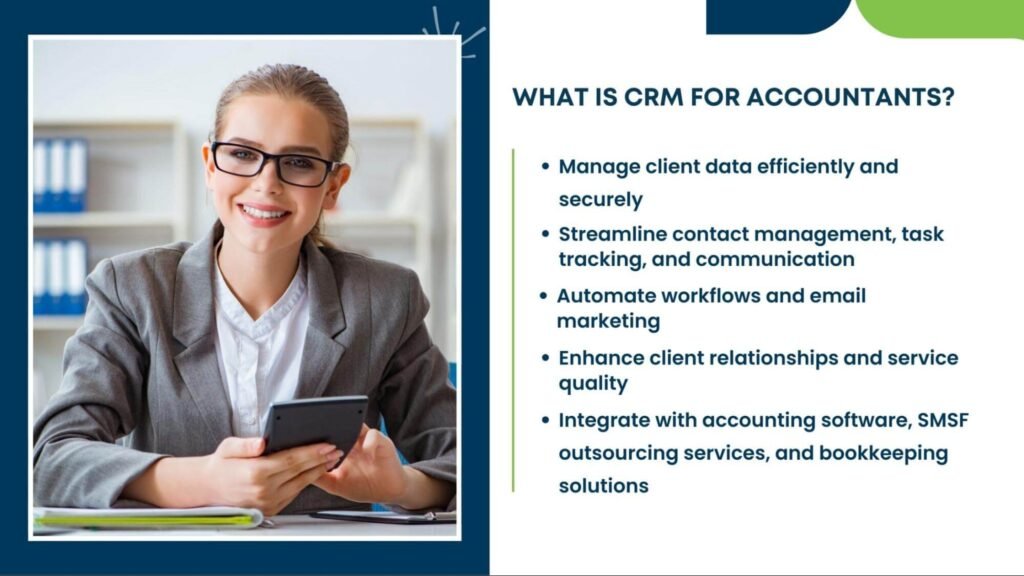
A graphic explaining CRM for accountants with a professional holding a smartphone and a list of features.

What is CRM for Accountants?

Customer relationship management (CRM) software helps outsourcing accounting firms, bookkeepers, and tax professionals manage client information and relationships with greater efficiency. These tools streamline contact management, task tracking, automation, communication, and even email marketing, bringing order to every aspect of client engagement. 

Many firms now combine CRM with services like document digitizing, accounts receivable outsourcing, and accounts payable outsourcing to simplify document handling, reporting, and cash flow management. The best CRM for accountants in 2025 depends on your firm’s size, goals, and workflows, from niche tools like TaxDome to broad platforms like HubSpot, Zoho, and Salesforce.

CRM and accounting software aim to help firms anticipate client needs and scale confidently. As more firms adopt client management software for accounting firms, the market has expanded rapidly. Many outsourced bookkeeping companies now integrate CRM systems with accounting platforms to provide firms with a unified, tech-driven financial management solution. To guide your 2025 choice, we reviewed 10 top platforms, highlighting why they stand out as the best accounting CRM software for firms of all sizes.

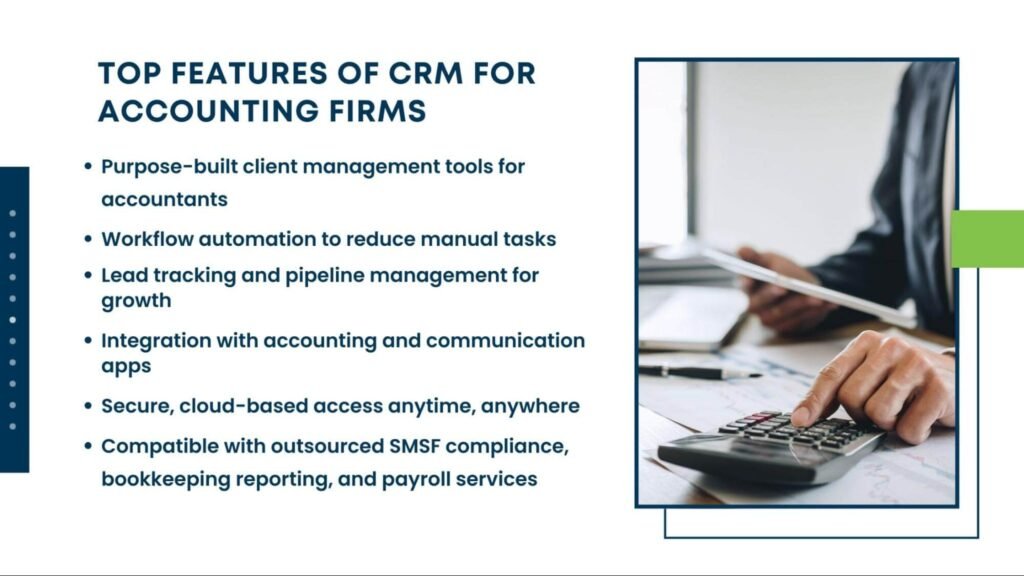
  • Purpose-built client management tools for accountants
  • Workflow automation to cut down manual work
  • Lead tracking and pipeline management for growth
  • Integration with accounting and communication apps
  • Secure, cloud-based access for anytime, anywhere use

Top 10 CRM Software for Accounting Firms in 2025

TaxDome CRM

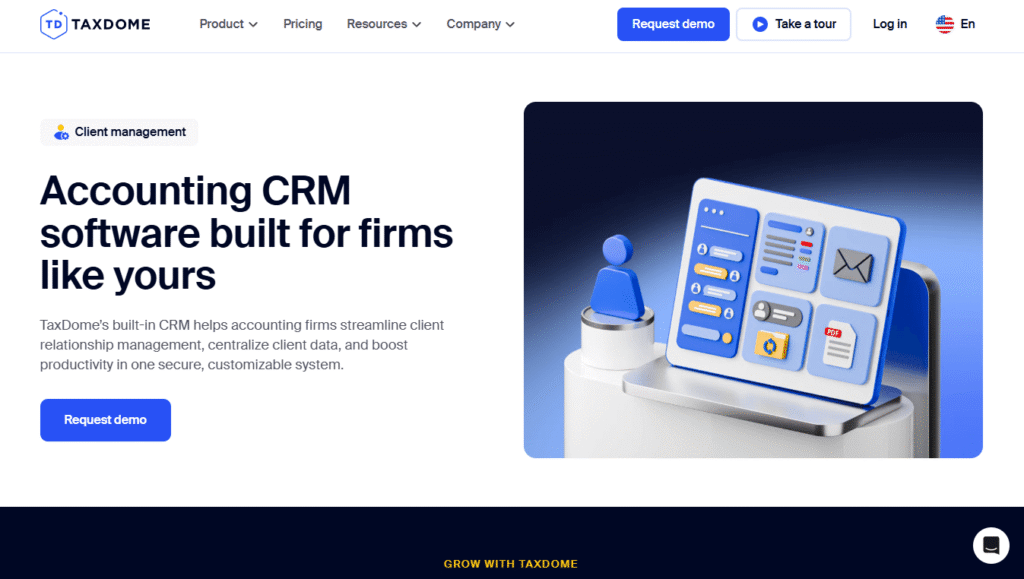
TaxDome CRM software is designed for accountants, bookkeepers, and tax professionals. It combines client management, workflow automation, and team collaboration in one intuitive platform, helping firms streamline operations and scale with ease.

A TaxDome webpage promoting accounting CRM software for firms, featuring a 3D tablet interface and a "Request Demo" button.

Key Features

  • Centralized dashboard with real-time updates
  • A secure, custom-branded client portal offering e-signatures, invoicing, and seamless document sharing.
  • Bulk email campaigns with reminders
  • Digital tax organizers and questionnaires
  • Integrations with QuickBooks, Zapier, Calendly, and Outlook
  • Unlimited storage, contacts, and e-signatures

Who Uses TaxDome?

TaxDome is trusted by firms of all sizes looking to simplify workflows and consolidate their tech stack. With transparent, all-inclusive pricing, it’s a smart option for practices aiming to grow efficiently.

Pros and Cons

Pros

  • Secure client portal and email sync
  • Unlimited storage and contacts
  • Built for accountants and tax professionals

Cons

  • Limited advanced lead generation tools

HubSpot CRM

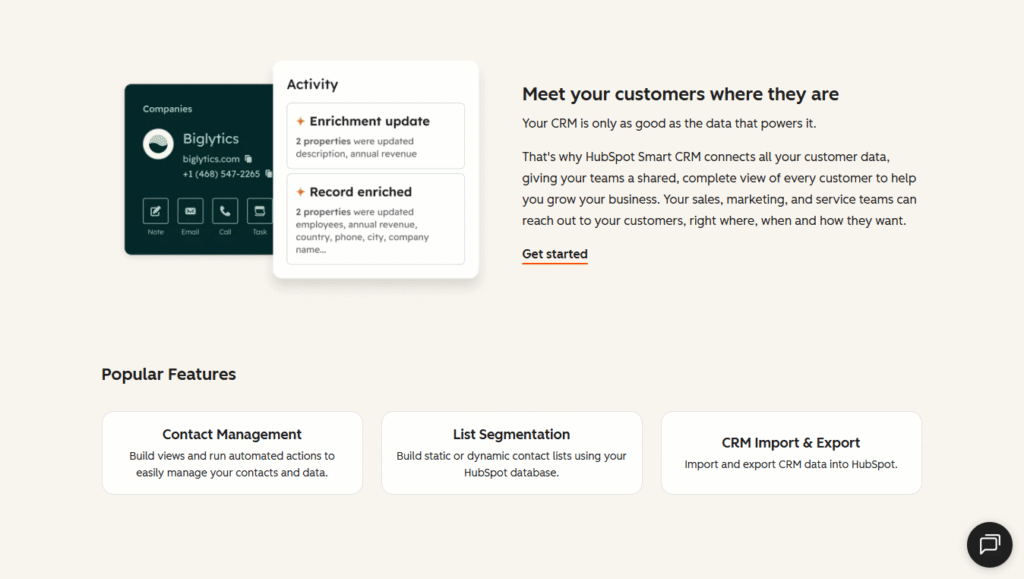
HubSpot CRM is a simple, user-friendly platform that helps firms track clients and teams through a clean, intuitive dashboard. Its automation and reporting tools make it a popular choice for growing practices.

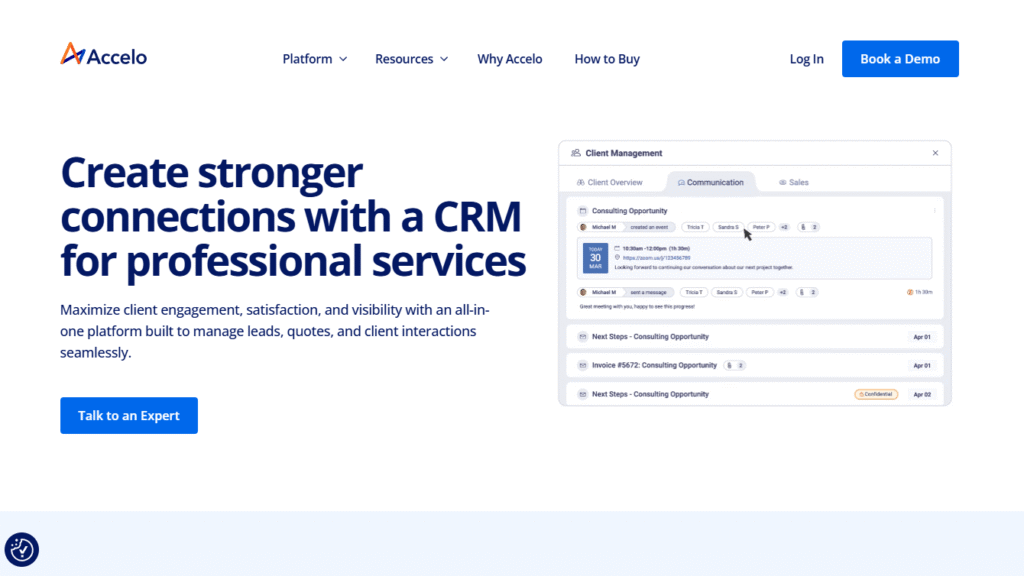
An Accelo webpage promoting CRM for professional services, featuring a client management interface and a "Talk to an Expert" button.

Key Features

  • Pipeline management to oversee client journeys
  • Task and lead automation to cut admin work
  • Performance tracking and reporting
  • Easy scheduling for meetings and appointments
  • Unlimited users, data, and up to 1M contacts

Who Uses HubSpot CRM?

HubSpot is widely used across industries by firms looking to grow their sales pipeline and client base. For accountants, it’s a smart option if they already use HubSpot’s marketing tools. Small practices benefit from the free version, while larger firms often upgrade for advanced features.

Pros and Cons

Pros

  • Free version available
  • Strong automation and reporting
  • Seamless integration with HubSpot tools
  • 1,500+ third-party integrations

Cons

  • Paid plans are expensive
  • Free version is limited for bigger firms

PipeDrive CRM

PipeDrive CRM is built to optimize the sales process, making it easier for firms to track leads and client interactions. With automation and communication tracking, it helps teams focus on conversion rather than admin work.

Key Features

  • Lead management across every stage of the pipeline
  • Automation of repetitive tasks
  • Tracking of emails, calls, and messages
  • Privacy and security alerts to safeguard client data

Who Uses PipeDrive CRM?

PipeDrive is popular with businesses that prioritize sales growth. While it’s widely used across industries, its strong sales focus makes it better suited to firms looking to boost lead generation rather than day-to-day accounting workflows.

Pros and Cons

Pros

  • Flexible pricing tiers
  • 24/7 lead generation chatbot
  • Sales automation tools
  • Drag-and-drop pipelines

Cons

  • Sales-focused, less relevant for accounting firms
  • Steep learning curve
  • Limited customization options

Insightly CRM

Insightly CRM helps businesses manage clients with lead routing, automation, and relationship tracking. It’s intuitive and scalable, making it a good fit for small to mid-sized firms.

Key Features

  • Lead routing with timely follow-ups
  • Task automation
  • Gmail/Outlook integrations
  • Bulk email campaigns with stats
  • Contact-to-organization links
  • Project milestone tracking

Who Uses It?

Best for small to mid-sized businesses needing growth-friendly CRM. However, it lacks accounting-specific tools.

Pros and Cons

Pros

  • 2,000+ integrations
  • Real-time insights
  • Easy to scale
  • User-friendly

Cons

  • Limited customization
  • No form builder
  • Less suited for enterprises

Zoho CRM

Zoho CRM helps businesses streamline sales, marketing, and client management with automation and customization options. It centralizes client data and offers detailed analytics for performance tracking.

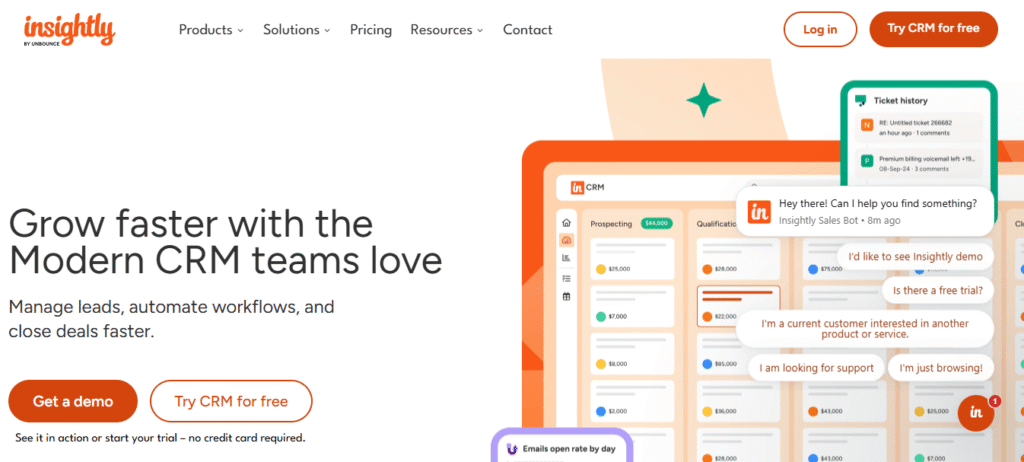
A modern Insightly CRM dashboard with a "Try Free" option.

Key Features

  • Marketing, sales, and workflow automation
  • Lead and deal management
  • Centralized contact management
  • Customizable workflows
  • Performance reporting & analytics
  • Email integration across platforms

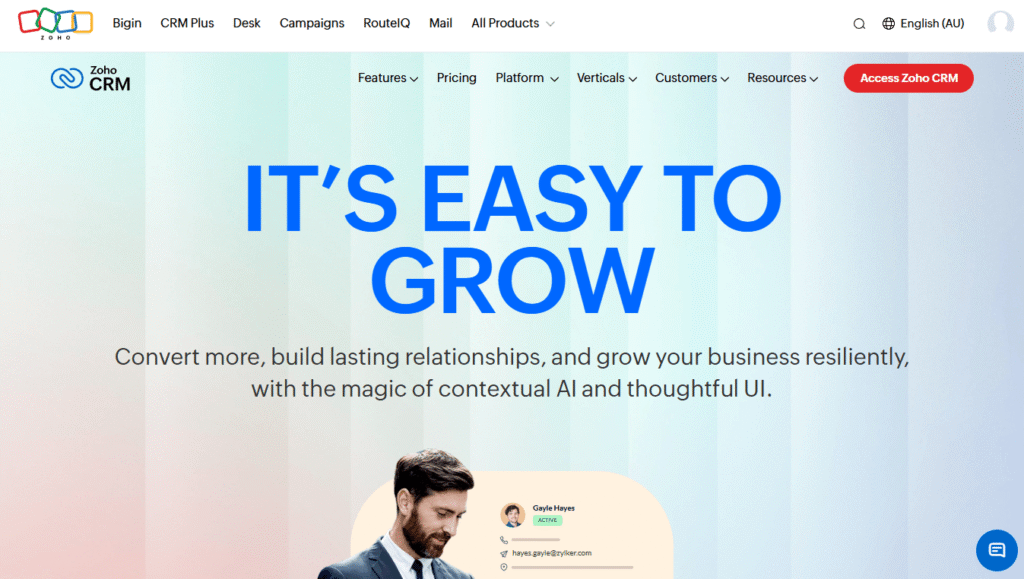
Who Uses It?

Used by businesses of all sizes. Small teams often opt for the free version, while larger firms using other Zoho tools benefit from its paid plans. Less relevant for accounting firms focused purely on client relationships.

Pros and Cons

Pros

  • Free version available
  • Integrates seamlessly with Zoho tools
  • Strong email automation

Cons

  • Steep learning curve
  • Complex setup and customization
  • Interface not very user-friendly

Nimble CRM

Nimble CRM focuses on relationship management by unifying contacts, tracking interactions, and offering team dashboards with client insights. It also integrates with web, email, and social platforms for easy access.

A Freshsales AI CRM dashboard with a "Try Free" button.

Key Features

  • Contact unification from 160+ apps
  • Client segmentation by needs and interests
  • Team dashboards with task and progress tracking
  • Visual sales pipeline
  • Analytics for sales and team performance

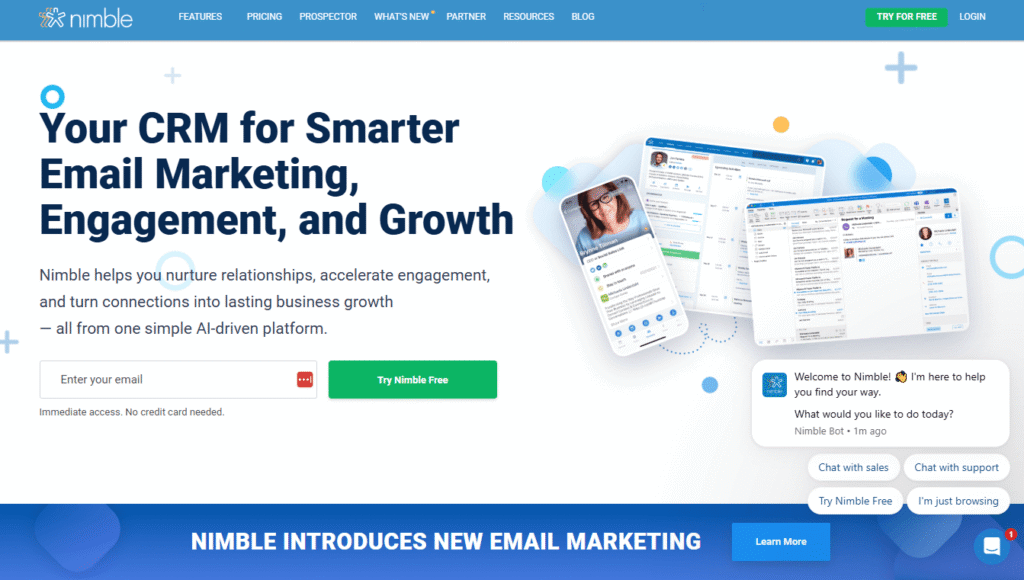
Who Uses It?

Best suited for solopreneurs and small businesses. While it excels at sales and marketing outreach, it may not fully align with the needs of accounting firms.

Pros and Cons

Pros

  • Browser and email extensions for lead capture
  • Social profile matching
  • Easy setup and use
  • Microsoft & Google integrations

Cons

  • Only one pricing tier
  • No desktop app

Method CRM

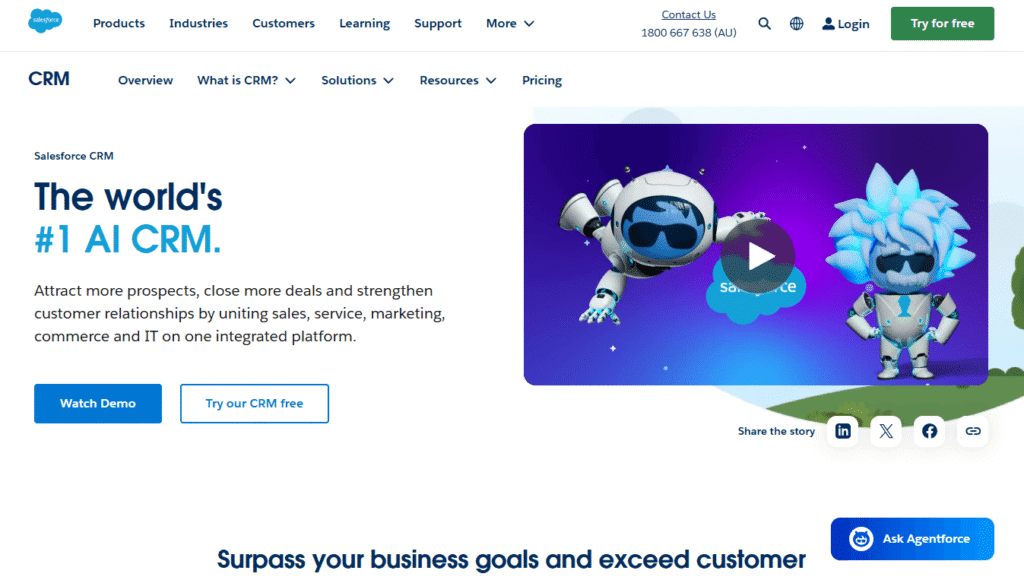
Method CRM is built for tax professionals and accounting firms that use QuickBooks, offering client portals, lead management, and customizable workflows.

A Salesforce AI CRM page with a "Try Free" option.

Key Features

  • Online client portal with self-serve payments
  • Automated lead management synced to QuickBooks
  • Centralized client data for targeted campaigns
  • Custom fields, tables, and templates

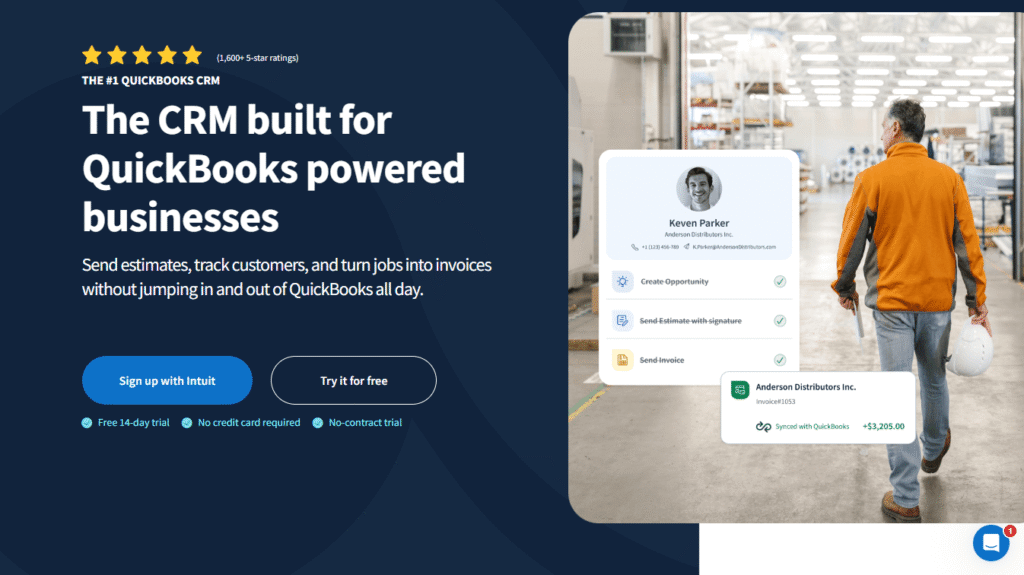
Who Uses It?

Ideal for small and mid-sized accounting firms needing a simple CRM integrated with QuickBooks. However, it lacks full practice management, so additional tools may be required.

Pros and Cons

Pros

  • Designed for accountants and tax professionals
  • Real-time QuickBooks sync
  • Automated workflows

Cons

  • Steep learning curve
  • Limited integrations beyond QuickBooks & Xero

Freshsales CRM

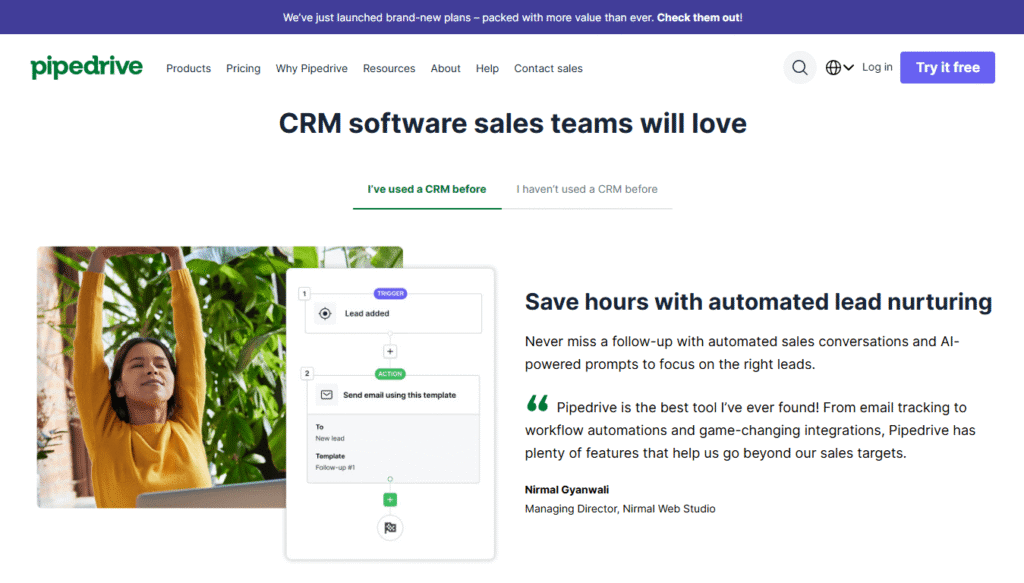
Freshsales is an AI-powered CRM designed to manage sales pipelines, generate leads, and streamline client tracking with automation and smart insights

A Pipedrive CRM page with a laptop image and "Automated Lead Nurturing"

Key Features

  • Workflow management with table and Kanban views
  • Email, chat, and SMS sync
  • Automated workflows and sales sequences
  • Integrations with Slack, Xero, Outlook, and more
  • AI-driven insights and reporting
  • Role-based access for teams

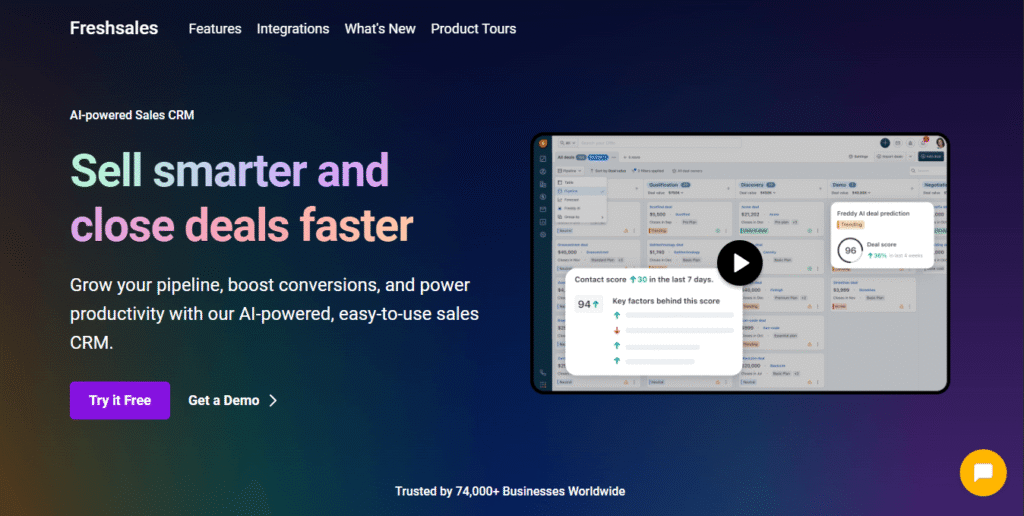
Who Uses It?

Freshsales is primarily adopted by small and mid-sized businesses, with a strong presence among firms in the professional services sector. While it integrates with popular accounting platforms, it lacks accounting-specific tools.

Pros and Cons

Pros

  • Free version available
  • All-in-one sales platform
  • Strong automation tools
  • Multi-channel communication support

Cons

  • No accounting-focused features
  • No 24/7 support
  • Can be costly for larger teams

Salesforce CRM

Salesforce is one of the world’s leading CRMs, with its Sales Cloud offering tools to engage leads, manage pipelines, and support clients through AI-driven insights.

Key Features

  • AI-powered sales insights
  • Predictive analytics and forecasting
  • Automated workflows and processes
  • Lead, account, and pipeline management
  • Real-time dashboards and reporting
  • Quote templates for faster deals

Who Uses It?

Trusted by over 150,000 companies worldwide, including AWS, Spotify, and Walmart, Salesforce is especially popular with large enterprises and sales-driven organizations.

Pros and Cons

Pros

  • Powerful AI and predictive analytics
  • Robust sales and lead management
  • Highly customizable
  • Scales for large enterprises

Cons

  • Steep learning curve
  • Complex pricing
  • Expensive for teams
  • Too sales-focused for accountants

Accelo CRM

Accelo is a cloud-based platform built for professional service firms. It combines CRM tools with project management, billing, payments, and resource management to streamline client work and boost profitability.

Key Features

  • Centralized client database
  • Opportunity tracking and forecasting
  • Automated client quotes and invoices
  • Project and resource management
  • Retainer agreements for recurring work
  • Client portal for communication and updates

Who Uses It?

Accelo is popular with accounting, consulting, and IT firms that want one system to manage clients, sales, and projects in a single platform.

Pros and Cons

Pros

  • Automates workflows and billing
  • Strong project management features
  • Replaces multiple tools
  • Customizable client portal

Cons

  • Steep learning curve
  • Pricing not transparent
  • Not accounting-specific
  • Mobile app needs improvement
A Bitrix24 CRM page showing a team dashboard and a "Get Started" button.

Conclusion

When choosing a CRM for accounting firms, practices should prioritize features that simplify client collaboration, improve workflow efficiency, and integrate seamlessly with accounting tools like QuickBooks or Xero. Many are also leveraging business planning services and compliance outsourcing to strengthen their operations and scale effectively.

The best accounting CRM software in 2025 depends on your firm’s size, goals, and workflows, from niche tools like TaxDome to broad platforms like HubSpot, Zoho, and Salesforce.

By adopting the right CRM system for accountants and combining it with services such as outsourced SMSF compliance, bookkeeping reporting services, or payroll processing outsourcing, firms can streamline operations, improve client relationships, and stay competitive in a rapidly evolving industry. To explore the best fit for your practice, feel free to get in touch with our team for tailored guidance.

Guide to Outsourced Accounting and Its Benefits in Australia

Guide to outsourced accounting and its benefits in Australia with professionals discussing at a meeting.

In today’s evolving business environment, many organisations are turning to outsourced accounting as a smarter, more cost-effective way to manage their finances. Instead of maintaining large in-house teams, businesses are leveraging specialised providers who combine advanced technology with financial expertise.

This shift not only reduces operational costs but also gives leaders access to accurate, real-time insights that support better decision-making.

With remote work and digital platforms becoming the new normal, outsourcing has gained even greater momentum in Australia. Recent surveys by CPA Australia highlight that more than 60% of firms are adopting technology-driven accounting solutions to stay competitive.

In this guide, we’ll explore what outsourced accounting services really mean, the advantages they offer, and the types of businesses best positioned to benefit from this approach.

What is Outsourced Accounting?

Accounting service outsourcing, also called outsourced accounting, is when a business hires a specialised third party to handle the accounting and finance functions of the organisation. Instead of relying solely on internal staff, businesses partner with professionals who bring expertise, advanced systems, and scalable support customised to their needs.

These outsourced accountants can oversee a wide range of financial responsibilities, including bookkeeping, payroll processing, preparation of financial reports, management accounting, tax compliance, accounts payable and receivable, debtor follow-ups, and other critical finance-related tasks. 

By adopting this model, organisations gain access to the same level of accuracy and professionalism as an in-house team, often at a fraction of the cost, while freeing up internal resources to focus on growth and strategy.

Why businesses choose accounting service outsourcing, highlighting cost savings, expertise, accuracy, and scalability.

What Are the Benefits of Outsourced Accounting?

Partnering with an outsourced accounting firm offers significant advantages. The outsourcing of accounting services not only reduces costs but also gives businesses access to skilled professionals and advanced tools that would otherwise be expensive to maintain in-house.

By leveraging specialist support, companies can strengthen financial accuracy, reduce risks, and free up resources to focus on growth opportunities.

Key Benefits of Outsourced Accounting

Save Money
Outsourcing accounting work is significantly more cost-effective than hiring a full in-house team. Instead of shouldering the overheads of staff and infrastructure, businesses can channel resources directly into growth.

  • Save on major costs including salaries, superannuation, office rent, and insurance.
  • Eliminate costs related to recruitment, onboarding, and training.
  • Only pay for the accounting services you need, exactly when you need them.
  • Gain access to a team with a wider skill set than a single employee could provide.

Access Expertise
Through accountant outsourcing, organisations can tap into the knowledge of specialists with advanced skills across multiple areas of finance. This ensures accuracy, compliance, and reliable reporting.

  • Certified professionals manage tax, payroll, bookkeeping, and compliance.
  • Reduce the risk of errors that may lead to costly penalties.
  • Benefit from industry best practices and up-to-date knowledge.
  • Access insights and advice that support strategic decision-making.

Save Time
Delegating financial responsibilities allows business leaders to focus on what truly matters, innovation and growth. With outsourced professionals managing the details, operations become more streamlined.

  • Spend less time managing accounts and financial reports.
  • Free up management bandwidth for business development.
  • Ensure timely board reports and financial presentations.
  • Reduce stress around compliance and regulatory deadlines.

Improve Productivity
Outsourced accountancy services empower businesses with reliable reporting and actionable insights. With a dedicated team handling finance, productivity across the organisation naturally improves.

  • Access real-time financial insights for better decisions.
  • Improve cash flow management and budgeting accuracy.
  • Streamline internal processes through automation and efficiency.
  • Enjoy peace of mind knowing all compliance and accounting tasks are covered
Mistakes to avoid in outsourcing accounting such as choosing the wrong firm, lack of business knowledge, and focusing only on short-term needs.

Common Mistakes People Make When Outsourcing

While outsourcing accounting work delivers significant benefits, businesses often fall into common traps when selecting a partner. Being aware of these mistakes can help organisations make better choices and build long-term, successful relationships with their providers.

  1. Choosing a Firm with Unaligned Values
    • Outsourcing is a partnership, not just a transaction.
    • If the provider’s values don’t align with yours, collaboration will be limited.
    • Shared vision and principles create trust and long-term success.
    • Always choose a firm that understands your goals and culture.
  1. Selecting a Provider Who Doesn’t Understand Your Business
    • Some providers focus only on completing tasks without context.
    • Lack of understanding can lead to missed insights and poor decisions.
    • A strong outsourcing partner will analyse your industry to provide customised solutions.
    • customised solutions go beyond compliance and support real growth.
  1. Focusing Only on Cost Instead of Quality
    • Cost savings are important but shouldn’t be the only factor.
    • The cheapest option may lack expertise, tools, or reliability.
    • Poor-quality service can lead to compliance risks and hidden costs.
    • Prioritise value, expertise, and scalability over price alone.

What to Do Before You Hire an Outsourced Accountant

Before engaging in financial accounting outsourcing, it’s essential to clearly define what you expect from the partnership. Too often, businesses rush into outsourcing without identifying their priorities, which can lead to mismatched expectations. A thoughtful approach ensures you choose the right provider and maximise the value of the relationship.

Steps to Take Before Hiring an Outsourced Accountant:

  1. Identify the Services You Need
    • List the accounting functions you want to outsource, such as bookkeeping, payroll, tax compliance, reporting, or transaction monitoring.
    • Be clear on whether you need full-service support or only specific functions.
    • Prioritise areas that consume the most time or create the biggest challenges in-house.
    • Ensure the provider you select has proven expertise in these areas.
  2. Clarify Your Business Goals
    • Go beyond tasks and define what outcomes you want to achieve.
    • Examples include improving cash flow, increasing efficiency, or gaining real-time visibility into your finances.
    • A strong outsourcing plan looks beyond short-term fixes and supports long-term growth.
    • Communicate these goals clearly so your provider can customise solutions.
  3. Assess Technology and Tools
    • Ensure the outsourced accountancy services, including payables outsourcing and other financial functions, use modern, cloud-based tools like Xero or MYOB.

    • Check that reporting systems are accessible, transparent, and secure.
    • Confirm that automation and digital processes are part of their offering.
    • Look for providers who can integrate efficiently with your existing systems.
  4. Evaluate the Partnership Fit
    • Choose a firm that understands your business and industry.
    • Check if their values and communication style align with yours.
    • Ask about their process for tailoring services to individual needs.
    • Prioritise firms that offer flexibility and proactive advice, not just task completion.

Conclusion

In an era where efficiency and accuracy define business success, outsourced accounting has become more than a cost-saving tactic, it’s a strategic move. By leveraging the expertise of specialised providers, businesses in Australia can streamline financial operations, ensure compliance, and access the latest digital tools, all while focusing their energy on innovation and growth.

Outsourcing empowers leaders to reduce risks, scale with confidence, and gain clear visibility into their financial health. As organisations continue to adapt to digital transformation and remote collaboration, the value of outsourcing accounting services will only grow stronger.

Whether it’s saving money, improving productivity, or achieving long-term financial clarity, partnering with the right outsourced accounting team can make the difference between simply managing numbers and driving meaningful business outcomes.

How Offshore Accountant Services Can Transform Your Firm

How offshore accountant services can transform your firm – professional accountant working on financial reports with calculator and documents.

The financial landscape has shifted dramatically since the global pandemic, pushing businesses to rethink how they manage core operations. One of the most impactful changes has been the rise of the offshore accountant as a strategic partner. 

By offshoring accounting processes, companies streamline operations, reduce overhead, and access highly skilled professionals at a fraction of local costs.

For many firms, the decision to hire offshore accountants is no longer just about savings, it’s about gaining access to reliable offshore partners who bring both technical expertise and scalability.

Understanding what is an offshore accountant and how these services work can be a turning point for firms seeking both efficiency and resilience. In this blog, we’ll explore the benefits of offshore accounting, the industries that stand to gain the most, and how adopting offshore solutions can strengthen decision-making while positioning your business for long-term success.

Key Takeaways

  • Australian firms are leveraging offshore accountants for bookkeeping, payroll, and compliance, gaining skilled professionals at a fraction of local costs.
  • Offshoring can cut overheads by up to 60%, freeing capital for growth and stronger financial controls.
  • Offshore accounting services provide detailed reporting and insights that support smarter planning and budgeting.
  • Tech-driven offshore bookkeeping services deliver automation, real-time access, and seamless collaboration.
  • India, Vietnam, the Philippines, Sri Lanka, and Malaysia remain top destinations for offshore accounting talent.

Offshore Accounting: An Overview

Offshore accounting services enable businesses to delegate bookkeeping, payroll, BAS preparation, reporting, and compliance to skilled professionals abroad, delivering quality work at significantly lower costs than local hiring. For Australian firms, partnering with an offshore accountant ensures compliance with global standards like IFRS and AASB while overcoming talent shortages and rising wage pressures.

Key advantages include:

  • Cost savings of up to 60% on overheads, freeing capital for reinvestment.
  • India offers access to a vast pool of highly trained accounting professionals, including one of the world’s largest networks of Chartered Accountants and finance graduates.
  • Stronger internal controls and faster reporting cycles.
  • Reduced local hiring burden and training expenses.
  • Allowing in-house teams to focus on strategy and growth.
Key benefits of offshore accounting – reduce costs by up to 60%, improve financial accuracy and compliance, speed up reporting cycles, strengthen internal controls, and free local teams for strategic work.

How Can Offshore Accounting Firms Help You?

Partnering with an offshore accountant gives businesses cost-effective access to skilled professionals who manage bookkeeping, payroll, tax compliance, SMSF and reporting. By leveraging global talent, firms improve accuracy, meet international standards, and scale without the overhead of expanding in-house finance teams.

Key ways offshore accounting firms add value include:

  • Cutting Costs Efficiently: Save up to 60% on accounting operations by avoiding expenses tied to salaries, benefits, office space, and technology. Offshore firms deliver high-quality services at a fraction of local costs.
  • Access to Skilled Professionals: Offshore accountants are trained in standards like AASB, IFRS, GAAP, and HMRC, often holding global certifications such as CPA, ACCA, or CA.
  • Stronger Cash Flow Management: Accurate books, timely payments, and receivables tracking create predictable cash flow cycles and ensure sufficient liquidity for growth.
  • In-depth Financial Reporting: Offshore accounting services, including CFO accounting services, provide customised KPI dashboards and profitability analysis, empowering better planning and strategic decisions.
  • Tech-Driven Solutions: Using platforms like Xero, Zoho, QuickBooks, and NetSuite, offshore bookkeeping services automate tasks, reduce errors, and provide real-time access to financial data.
  • Scalable Resources: Flexible models let you outsource anything from monthly bookkeeping to virtual CFO services, adjusting easily as your firm grows.
  • Round-the-Clock Operations: With teams across time zones, tasks are completed overnight, shortening turnaround times and keeping business operations seamless.

Common Offshore Accounting Challenges Faced by Businesses

While working with an offshore accountant offers cost savings and access to global expertise, it also comes with challenges that firms must address proactively. Being aware of these hurdles allows businesses to plan better, safeguard compliance, and build stronger offshore partnerships.

Key challenges include:

  • Cybersecurity Risks: Sharing financial data with offshore teams can expose businesses to potential breaches if providers lack robust protections like encryption, two-factor authentication, and routine security audits.
  • Language and Cultural Barriers: Differences in communication styles, accents, and workplace culture may cause misunderstandings. Sensitivity training, SOPs, and clear documentation help bridge these gaps.
  • Unclear Goals and Expectations: Offshore projects often fail when roles, deliverables, and KPIs aren’t clearly defined. Strong onboarding, detailed workflows, and regular progress reviews are essential.
  • Regulatory and Compliance Issues: Offshore teams must understand local requirements such as BAS lodgement and ATO reporting, as well as international frameworks like IFRS, GAAP, and HMRC guidelines, to prevent compliance risks.
  • Quality Control and Oversight: Distance makes monitoring more complex. Without review systems, dashboards, and real-time communication, small errors can escalate. Internal controls and automation ensure accountability.

A Step-by-Step Guide to Building Your Offshore Accounting Team

Building an offshore accounting team allows businesses to cut costs, improve efficiency, and tap into a vast pool of global financial expertise. With the right planning, even small and mid-sized firms can build a reliable team that delivers round-the-clock financial support without the overhead of hiring in-house.

Steps to build a successful offshore team:

  • Set Clear Goals and Requirements: Define your offshoring objectives, whether it’s cutting costs, managing seasonal workload spikes, or enhancing efficiency. Identify specific functions like bookkeeping, accounts payable, payroll, or tax filing.
  • Select the Right Offshore Provider: Research firms with proven expertise, strong client portfolios, and familiarity with your country’s accounting standards. This ensures accurate, compliant, and high-quality delivery.
  • Implement Strong Communication Protocols: Use tools like Zoom for weekly reviews, Slack for daily updates, and task managers like Asana or Trello. Define clear reporting guidelines, turnaround times, and feedback processes.
  • Equip with Essential Tech and Infrastructure: Provide access to cloud-based tools like Xero, QuickBooks Online, or NetSuite. Secure collaboration with VPNs and multi-factor authentication, and ensure system integration to prevent delays or duplication.

Train and Onboard Your Offshore Team: Align offshore staff with your workflows, SOPs, and compliance policies. Use video training, live sessions, and structured onboarding to build long-term accuracy and efficiency.

Advantages of hiring offshore accountants in India – large pool of skilled finance graduates, expertise in Australian compliance, cost savings, faster turnaround, and flexible support for bookkeeping, payroll, and BAS.

Best Country to Set Up Your Offshore Accounting Team

When it comes to offshore accounting services, India consistently ranks as the top choice for Australian businesses. With a vast pool of finance planning professionals, cost efficiency, and strong regulatory frameworks, India has become the go-to hub for global companies seeking reliable offshore accounting support.

Why India Leads in Offshore Accounting:

  • Unmatched Talent Pool: Over 400,000 Chartered Accountants and nearly 985,000 students enrolled in CA programs by 2025 ensure a steady pipeline of skilled professionals.
  • Global Standards: Accountants are well-trained in IFRS and AASB guidelines, ensuring compliance with international reporting requirements.
  • Cost Savings: Businesses can save up to 60% on overheads, freeing resources for growth and innovation.
  • Strong Infrastructure: A mature outsourcing ecosystem and advanced IT capabilities support seamless operations.
  • Strategic Value: Offshore accountants in India go beyond bookkeeping, delivering financial insights that enhance decision-making and business resilience.

With its unmatched talent pool, India remains the top destination for businesses looking to hire offshore accountants who are well-versed in international financial reporting standards.

Conclusion

Offshore accounting services give businesses the ability to lower costs, improve accuracy, and strengthen compliance with global standards. By accessing skilled professionals in cost-efficient markets like India, companies can achieve greater flexibility, scalability, and operational efficiency. This shift allows in-house teams to dedicate more time to strategic initiatives and business growth rather than routine financial tasks.

That said, the true success of offshoring lies in choosing the right partner. An experienced, versatile, and credible provider of offshore accounting services ensures not just smooth operations but also long-term value creation. With the right collaboration, businesses can unlock the full potential of outsourcing while safeguarding accuracy, compliance, and trust.

Client Accounting Services Explained: A 7 Step Guide

Business professionals discussing client accounting services with text overlay "Client Accounting Services Explained: A 7 Step Guide".

In Australia’s rapidly changing business environment, client accounting services are emerging as a cornerstone for firms looking to deliver more than compliance. They combine accurate bookkeeping and financial management with forward-looking insights that help businesses grow with confidence. 

According to CPA Australia, nearly 64% of accountants believe technology-driven services, such as client accounting and advisory solutions, will reshape the profession in the next five years. This shift underscores the value of CAS in empowering businesses to make smarter decisions and strengthening the role of accountants as trusted advisors.

What are client accounting services: A Clear Definition

When business owners first ask, “What is client accounting services?”, the answer often sounds more complex than it needs to be. At its core, client accounting services (CAS) function as an outsourced accounting department, providing businesses with the same support they would expect from an in-house team, without the overhead.

Think of the responsibilities an internal finance team would typically manage:

  • Bookkeeping and day-to-day transaction recording
  • Bill payments and vendor management
  • Accounts receivable and collections
  • Payroll processing and compliance
  • Cash flow monitoring and forecasting
  • Financial statement preparation
  • Tax planning and compliance reporting

These core tasks, typically handled on a weekly or monthly basis by an accounting technician or controller, form the foundation of client accounting services. While some firms expand into higher-value roles through client accounting and advisory services (CAAS) or client accounting advisory services, this guide focuses on the technician- and controller-level work that delivers businesses consistent financial clarity.

For years, many accounting firms in Australia and beyond were reluctant to embrace CAS, viewing it as low-margin and operationally heavy compared to audit and tax. Today, however, the outlook is very different. 

According to Accounting Today’s Top 100 Firms report, client accounting services were among the fastest-growing service lines in 2024, proving their potential for profitability and client retention. This shift is further driven by the rapid adoption of client accounting software, which allows firms to scale efficiently while providing clients with real-time financial insights.

Benefits of Cloud-Based Client Accounting Services

  1. Seamless Upsell into Advisory
    Acting as a client’s virtual accounting department gives you clear insights, making it easier to offer client advisory services.
  2. Strong Market Demand
    A Xero survey found 77% of business owners would pay to offload CAS-related tasks, proof that demand is high.
  3. Easier Standardisation
    With client accounting services, you control workflows and data, making it simpler to standardise and scale.
  4. Stronger Client Retention
    Surrounding clients with multiple services increases loyalty and makes switching providers less likely.
  5. Greater Compliance Efficiency
    Managing books and payroll directly saves time and costs, boosting overall margins.

Enhanced Client Experience

Hands-on involvement shows care for clients’ businesses, creating deeper relationships and long-term trust.

Notebook with text "Step-by-Step Guide" alongside list of 7 steps for client accounting services including technology foundation, sales process, subscription model, SOPs, capacity planning, and team reskilling.

7- Step Client Accounting Services Guide

Step 1: Build a Strong Technology Foundation

A robust setup starts with technology. Manual data entry is outdated, automation drives efficiency and insights.

Key actions to take:

  • Adopt core cloud software: Use Xero or QuickBooks Online as the central hub for bookkeeping and workflows.
  • Expand with integrated apps: Add tools like Hubdoc or Dext (Receipt Bank) for expense management, and payroll solutions such as Gusto or KeyPay (for Australia).
  • Start small, then scale: Master 2–3 applications before adding more.
  • Become a power user: Deep expertise ensures smooth automation, better efficiency, and the ability to grow your client accounting and advisory services.

Step 2: Adjust Your Sales Process for CAS

Selling client accounting services requires a different approach than selling a tax plan or annual financial statements. Since CAS is built on workflows, your sales process must focus on identifying, assessing, and improving those workflows to deliver real value.

Key actions to take:

  • Evaluate current workflows: Understand how invoices are created, how revenue is collected, and how expenses are managed.
  • Assess payroll processes: Review the number of employees, payroll frequency, and payment methods to identify inefficiencies.
  • Visualise ideal workflows: Map out how automation and the technology stack from Step 1 can streamline operations.
  • Position value clearly: Show clients how you will take over and improve their workflows, this is ultimately what they are investing in.

By aligning your sales process with workflow improvements, you position your firm as not just a service provider, but a strategic partner in their business operations.

Step 3: Package CAS into a Subscription Model

Since CAS provide ongoing value, they are best delivered through a monthly subscription rather than one-off billing. This ensures consistency and reliability for both your firm and the client.

Key actions to take:

  • Package your services: Clearly outline the bookkeeping, accounting, and support you’ll provide. For clients seeking consistent cash flow management, including outsourced accounts receivable services in your subscription can enhance service value and predictability.
  • Include technology tools: Specify which client accounting software and apps are part of the package.
  • Set transparent pricing: Establish fixed monthly fees aligned with the scope of work.
  • Communicate recurring value: Position the subscription as an investment in ongoing financial clarity and efficiency.

By standardising CAS into a subscription offer, you not only simplify pricing but also build stronger, long-term client relationships.

Step 4: Standardise Your CAS Delivery Processes

The success of CAS lies in consistency. Since CAS accounting is highly repetitive, your margins and client satisfaction improve when every process is delivered the same way, every time.

A simple framework to achieve this:

  • Document tasks: Have an experienced team member write out step-by-step instructions.
  • Optimise workflows: Review and refine the process for efficiency.
  • Centralise knowledge: Store procedures in a shared knowledge base.
  • Train your team: Ensure everyone follows the same steps.
  • Review regularly: Revisit processes quarterly to make further improvements.

If a service is new, perform it yourself initially, work through the challenges, and then document it for the team. This discipline ensures scalable, efficient, and reliable CAS delivery.

Step 5: Create Client-Specific SOPs

While Step 4 focused on firm-wide processes, each client’s workflows come with unique requirements. To deliver consistent client accounting services, you need to document these variations clearly.

For example, payroll approvals might go through a CFO rather than a COO, or rent expenses may need splitting between multiple GL accounts. Without proper documentation, these details can be overlooked, leading to client frustration.

By building client-specific SOPs, your team ensures accuracy, consistency, and client satisfaction, no matter who handles the task.

Step 6: Plan Capacity Effectively

Capacity planning is critical for delivering CAS consistently and on time. Unlike annual tax or audit work, CAS requires routine, clockwork precision, missing something like a payroll cycle is unacceptable and risks losing the client.

To avoid this, model your team’s available hours against forecasted client needs. This ensures commitments are met without overloading staff, protecting both service quality and team wellbeing. Strong capacity planning creates reliability, which is the backbone of CAS success.

Step 7: Invest in Reskilling Your Team

Moving into client accounting services requires new skills and a different mindset compared to annual compliance work. Since CAS is delivered weekly or monthly, your team must adapt to faster cycles, closer client relationships, and new technology.

Key areas to focus on:

  • Time management & prioritisation: Meet tighter, recurring deadlines without overloading staff.
  • Technology skills: Master client accounting software and integrated apps (see Step 1).
  • Customer service skills: Strengthen communication and collaboration, positioning your team as an extension of the client’s business.

Reskilling ensures your firm delivers consistent, high-quality CAS while building stronger, long-term client partnerships.

Woman in headset working at desk with text explaining benefits of CAS accounting for firms, including compliance, revenue, client relationships, financial insights, and strategic positioning.

Conclusion: Building a Strong Client Accounting Services Framework

Implementing client accounting services (CAS) is more than just adding another revenue stream, it’s about reshaping the way your firm delivers value. By following this 7-step guide, from identifying the right technology to reskilling your team, you create a scalable and efficient CAS model that ensures consistency, client satisfaction, and profitability.

Every client is unique, but the foundation of success lies in standardized processes, clear capacity planning, and continuous improvement. Firms that embrace these practices not only deliver seamless accounting support but also position themselves as trusted advisors and long-term partners.

In today’s competitive landscape, CAS are no longer optional, they’re essential for firms that want to grow, stay relevant, and meet the evolving expectations of businesses. With the right framework and expert, your firm can turn CAS into a sustainable growth engine for the future.